← Map of all journeys parcours-anglais-lycee.netlify.app/seconde/ok-boomer/

The big question

When young and old disagree about screens or the climate, is the gap between generations a wall, or a bridge we can build?

Why this journey?

“OK boomer” became famous as a way for young people to answer older ones. But generations also need each other. In this journey, you discover a famous moment in a parliament, a nursery inside a care home, and climate strikes, to understand what separates and what connects generations. You never talk about your own family: you study public examples. At the end, you write and vote a Generation Pact.

LevelSeconde (general)
TargetCEFR A2 → B1
Sessions6 sessions + a game + a final task
Final taskWrite a 5-rule Generation Pact (about 120 words) and defend it in 2 minutes; the class votes.

Bridges This journey is part of a path: each journey answers and builds on others.

⟵ Builds on…

Leads to… ⟶

Threads in this journey: VoicePlanetIdentity

1

What do adults get wrong?

Find words for the gap between generations.

Documents and facts

  • The Pew Research Center defines generations by birth years: Baby Boomers (1946–1964), Generation X (1965–1980), Millennials (1981–1996), Generation Z (1997–2012).

What you do

  1. Write on anonymous sticky notes: one cliché adults have about teens online, one cliché teens have about adults. No personal stories.
  2. Sort the notes on the board: fair / unfair / partly true.
  3. Learn the generation names and their birth years.

Sentence starters

  • Adults often think that teens…
  • Teens often think that adults…
  • This cliché is unfair because…

Speak up

Each student reads one note and says if it is fair or unfair.

Learn how to learn · Quick Recall

Before you open your notes, write 3 things you remember from last time. Then check. Testing yourself works better than reading again.
2

“OK boomer” in Parliament

Discover a famous exchange about the climate.

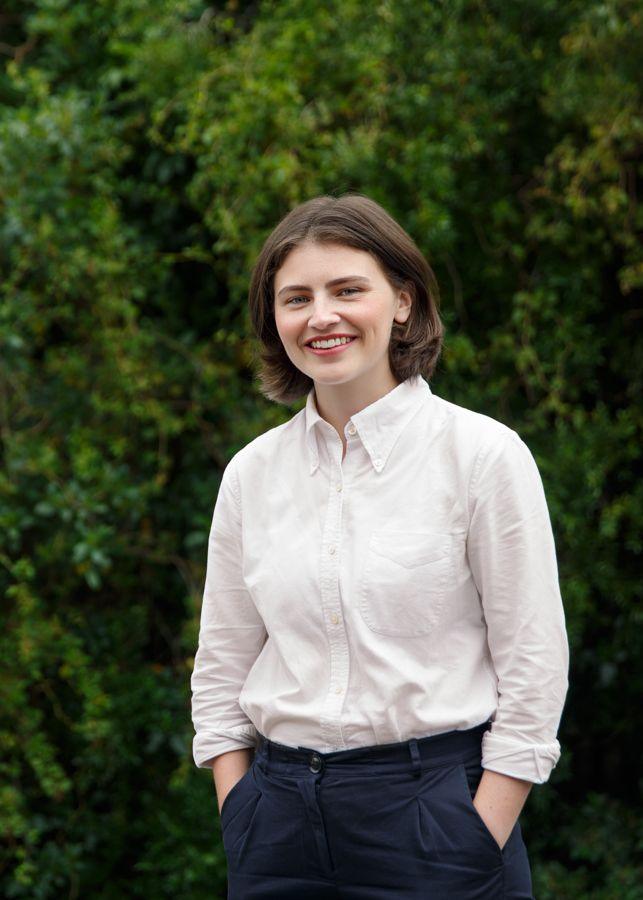
Chlöe Swarbrick, Member of Parliament in New Zealand.
Chlöe Swarbrick, Member of Parliament in New Zealand.Image: Green Party · CC BY-SA 4.0 · Wikimedia Commons

Documents and facts

  • On 5 November 2019, Chlöe Swarbrick, a 25-year-old MP, spoke about the Zero Carbon Bill in the New Zealand Parliament.
  • She said that in 2050 she would be 56, while the average age of that Parliament was 49.
  • When an older MP interrupted her, she answered: “OK boomer.” The clip went around the world.

Sources: BBC News: ‘OK boomer’, 25-year-old New Zealand MP (7 Nov 2019) · New Zealand Parliament

What you do

  1. Read the BBC article and find the numbers: her age, 2050, 49.
  2. Discuss: why did she talk about her age in a debate on climate?
  3. Was “OK boomer” a fair answer or a rude one? Give one reason.

Sentence starters

  • She mentioned her age because…
  • “OK boomer” was fair / rude because…
  • On the climate, young people feel…

Speak up

Role-play: one student reads Swarbrick’s argument, another answers politely as an older MP.

Learn how to learn · Explain it to a partner

Explain today’s main idea to a partner in 30 seconds, without notes. If you get stuck, that is the part to review.

3

Voting then and now

See how each generation won its voice.

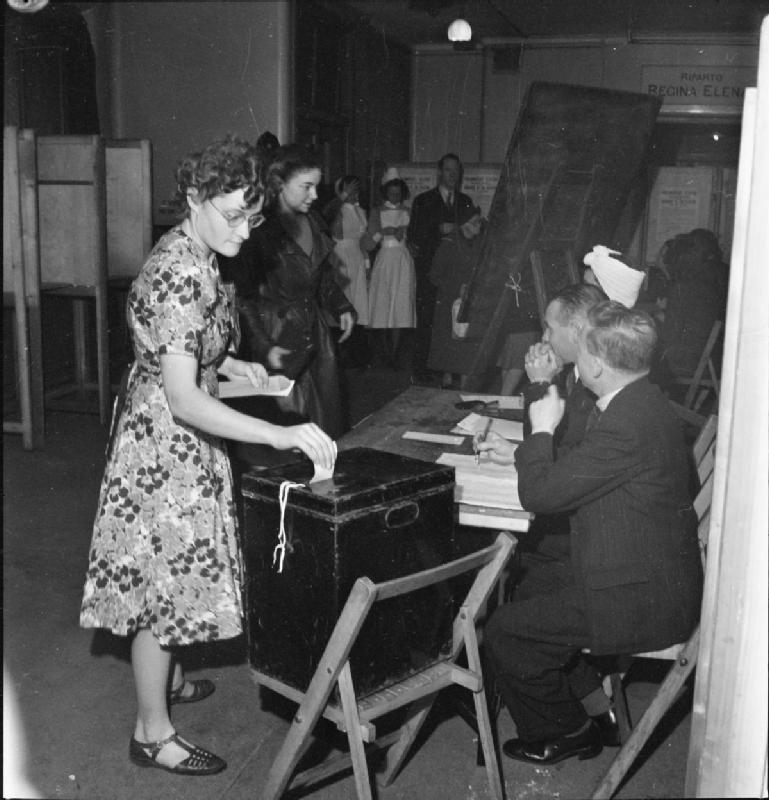
London, 5 July 1945: voters at a polling station on election day.
London, 5 July 1945: voters at a polling station on election day.Image: Ministry of Information Photo Division Photographer · Public domain · Wikimedia Commons

Documents and facts

  • In 1945, people in the UK had to be 21 to vote.
  • In 1969, the Representation of the People Act lowered the voting age to 18.

Sources: UK Parliament: Women and the vote, key dates · GOV.UK: Types of election and who can vote

What you do

  1. Look at the 1945 photo: who could vote? Who could not?
  2. Imagine a dialogue between a voter of 1945 and a teen of today about what matters most.
  3. List three things that changed and one that stayed the same.

Sentence starters

  • In 1945, you had to be… to vote.
  • In 1969,…
  • Each generation wanted…

Speak up

Perform your two-line dialogue in pairs.

Learn how to learn · Word + picture

Draw a tiny picture next to each new word. Your brain remembers a word and an image better than a word alone.

4

A nursery in a care home

Find examples where generations help each other.

Documents and facts

  • In 2017, Apples and Honey Nightingale opened in London: it was described as the UK’s first nursery inside a care home.
  • Toddlers and older residents share activities like music, painting and gardening every day.

Sources: Apples and Honey Nightingale (official site)

What you do

  1. Read the information and list what each generation gives the other.
  2. In groups, invent another project that brings teens and older people together (a phone café, a garden, a podcast…).
  3. Present your project idea in three sentences.

Sentence starters

  • The children give the residents…
  • The residents give the children…
  • Our project brings… and… together.

Speak up

Each group presents its project in 45 seconds.

Learn how to learn · Homemade flashcards

Write a question on one side and the answer on the other. Test yourself today, in 2 days and in a week.

5

Create your own game: Bridge the Gap

Invent a role-play game where two generations must agree.

What you do

  1. Make situation cards: phones at dinner, flights for holidays, music in the car, recycling at home…
  2. One player is a teen, one a grandparent character. They have one minute to reach a compromise.
  3. Write the rules with the rule starters, then test them.

Sentence starters

  • Each player must…
  • You score when…
  • Before you start, …

Speak up

Play one round in front of the class.

Learn how to learn · Spaced review

Review today’s words tonight for 5 minutes, then again in 3 days. Short and spaced beats long and once.

6

Final task: our Generation Pact

Write and defend 5 rules for living better together.

What you do

  1. In groups, write a Generation Pact of 5 rules (about 120 words) for screens and the planet.
  2. Defend your pact in 2 minutes.
  3. The class votes for the 5 best rules from all groups and makes one class pact.

Sentence starters

  • We agree that…
  • Both generations could…
  • Rule number one is… because…

Speak up

2-minute presentation of the pact, then a class vote.

Learn how to learn · What I know / What I don’t know yet

Make two columns. A mistake is information: it tells you exactly what to practise next.

★ Create your own game: Bridge the Gap

A role-play game: one player is a teen, one a grandparent character. Each card is a situation (phones at dinner, flights, music). You score a point when you reach a compromise in a full sentence.

Rule-writing starters

  • The aim of the game is to…
  • Each player must…
  • If you land on…, you…
  • You win when…
  • You miss a turn if…
  • Before you start, …

Final task

Write a 5-rule Generation Pact (about 120 words) and defend it in 2 minutes; the class votes.

Effort badges

Badges reward effort and progress, never a ranking. Everyone can earn every badge.

Brave SpeakerI dared to speak in English, even with mistakes.
Team PlayerI helped my group succeed.
Game DesignerI invented or improved a game.
Fair DebaterI gave an argument and listened to the other side.
Comeback BadgeI did better than last time.

✓ Assessment

How will I be assessed?

Printable grid (PDF with QR code)

DURING I practise AT THE END I show what I know

Two kinds of assessment go with you. The first one helps you improve. The second one checks what you have learnt at the end.

During the sequence: formative assessmentAt the end: summative assessment
It helps you improve.It checks what you have learnt.
You are allowed to make mistakes: a mistake you spot is a mistake you will not make again.You show what you can do, with criteria you already know.
You check your own work with the checklist.The teacher uses the same grid as you.
In this sequence: sessions 1 to 5 (the sticky notes, the Swarbrick role-play, the 1945 dialogue, the project idea, Bridge the Gap).In this sequence: your Generation Pact (about 120 words), marked out of 20; the oral defence is practice.

While I practise, I can say

  • “I am not sure yet about…”
  • “Can you check if this fact is right: …?”
  • “I made a mistake with… Now I know that…”
  • “The word I want to remember is… because…”

Reminder: Printable grid (PDF with QR code) · Madame Carole Paoli Pompougnac · © 2026 · CC BY-NC-ND 4.0

⎙ Printable fiche

QR code to this journey

The one-page fiche sums up the journey: the big question, the sessions, the sentence starters, the final task and the badges. It has a QR code back to this page.

Open the printable fiche Assessment grid (PDF)

Image credits

Videos, films, songs and protected texts are not copied here: follow the links to the official sources.

Repères pour le professeur (en français)

Niveau : Seconde · CECRL visé : A2 → B1

Ancrage programme : Axe 2 « Vivre entre générations » · objets d’étude : l’évolution de la cellule familiale ; l’écologie, une fracture générationnelle ?

Fil rouge : Voice, Planet, Identity. Les blocs « Bridges » relient ce parcours aux autres parcours de la carte.

Évaluation : formative pendant les séances 1 à 5, sommative avec la tâche finale ; grille de notation et grille de correction dans l’onglet professeur du bloc d’évaluation, et en PDF avec QR code.

À noter : Pas d’exposition de la situation familiale : post-it anonymes, clichés généraux, personnages fictifs. La série Adolescence (15+) n’est pas utilisée.