← Map of all journeys parcours-anglais-lycee.netlify.app/seconde/who-owns-a-song/

The big question

Can anyone own a song, a story or a sacred place, and what do we owe to the people whose culture it comes from?

Why this journey?

Today, an AI can make a song in seconds. But for Aboriginal peoples in Australia, songs have carried knowledge, law and the map of the land for tens of thousands of years. In this journey, you compare these two worlds to understand what it means to own, share and respect a culture. At the end, you defend a position: should AI songs be labelled?

LevelSeconde (general)
TargetCEFR A2 → B1
Sessions6 sessions + a game + a final task
Final taskOral position (2–3 minutes, B1): “Should AI-made songs be labelled?”, with one example from Aboriginal culture.

Bridges This journey is part of a path: each journey answers and builds on others.

⟵ Builds on…

Leads to… ⟶

Threads in this journey: OwnershipIdentityTruth

1

AI band or real band?

Listen, guess and ask who owns music.
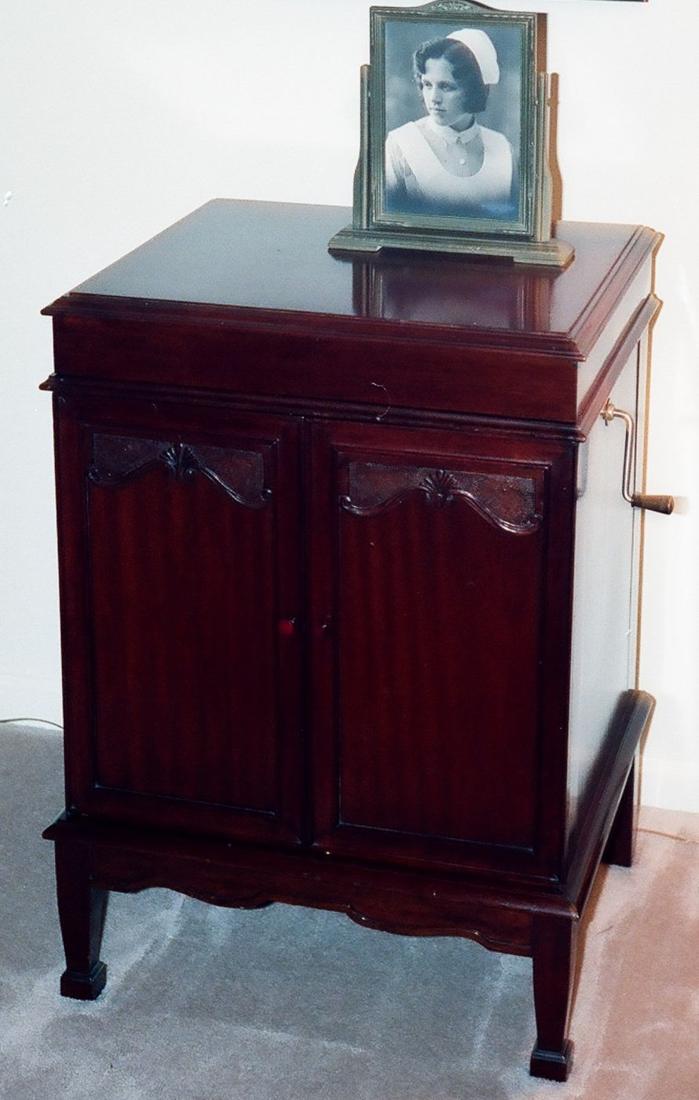
An early 1900s gramophone: for a long time, owning music meant owning a record.
An early 1900s gramophone: for a long time, owning music meant owning a record.Image: Joe Haupt from USA · CC BY-SA 2.0 · Wikimedia Commons

Documents and facts

  • In July 2025, The Velvet Sundown, a “band” with around a million monthly listeners on Spotify, said it was a project made with AI.

Sources: The Guardian: The Velvet Sundown, an AI band

What you do

  1. Listen to two short clips chosen by your teacher and guess: human or AI?
  2. List who could own an AI song: the user, the company, the artists whose songs trained the AI, nobody?
  3. Vote and explain your choice.

Sentence starters

  • This song sounds…
  • I think it was made by…
  • The owner should be… because…

Speak up

Each student defends one possible owner in one sentence.

Learn how to learn · Quick Recall

Before you open your notes, write 3 things you remember from last time. Then check. Testing yourself works better than reading again.

2

Treaty: a song for a people

Discover how a song can carry a people’s demand.

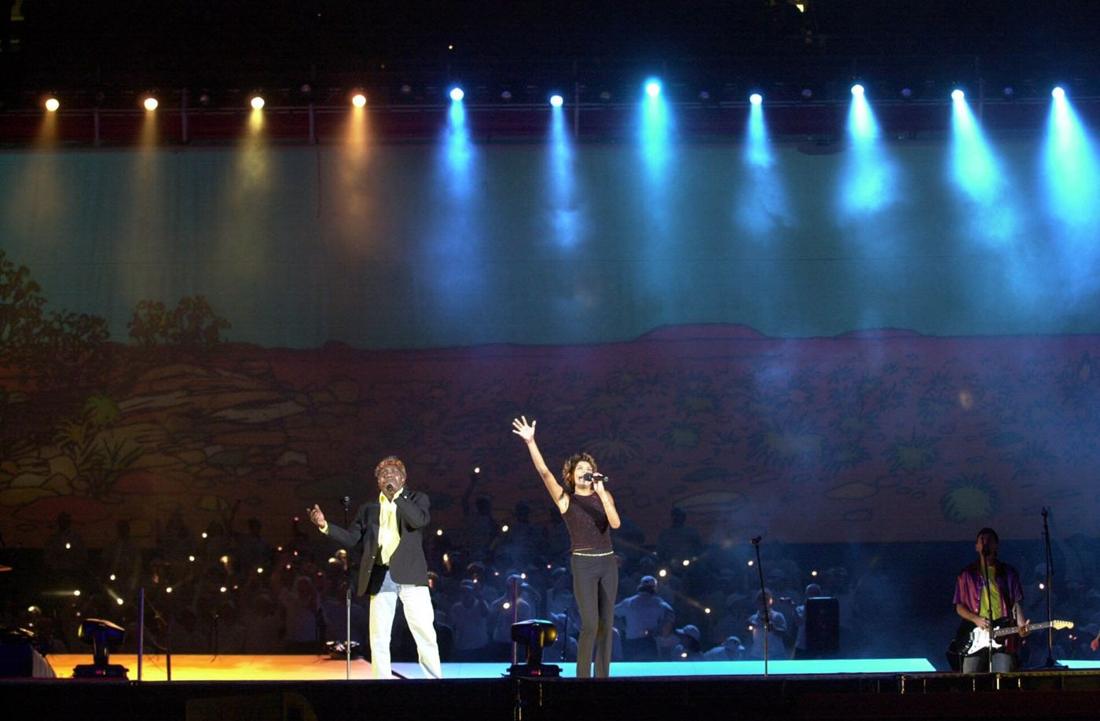
Yothu Yindi performing at the opening ceremony of the Sydney Olympic Games, 2000.
Yothu Yindi performing at the opening ceremony of the Sydney Olympic Games, 2000.Image: Sport the library · CC BY-SA 3.0 · Wikimedia Commons

Documents and facts

  • Yothu Yindi is a band that mixes rock music with Yolŋu songs from Arnhem Land.
  • In 1991, their song “Treaty” called for a treaty between the Australian government and Aboriginal peoples. In 2009, the National Film and Sound Archive added it to its “Sounds of Australia” collection.

Sources: National Film and Sound Archive of Australia: Treaty · Yothu Yindi Foundation

What you do

  1. Listen to the song on the official archive page (link) and note the instruments you can hear.
  2. Read the facts: what did the song ask for?
  3. Discuss: why use a song, and not a speech, to send this message?

Sentence starters

  • Treaty is about…
  • I can hear…
  • A song can carry a message because…

Speak up

Present the song to the class as a radio presenter, in 30 seconds.

Learn how to learn · Explain it to a partner

Explain today’s main idea to a partner in 30 seconds, without notes. If you get stuck, that is the part to review.

3

Songlines and Uluru

Understand songs that map the land, and what respect means.

Documents and facts

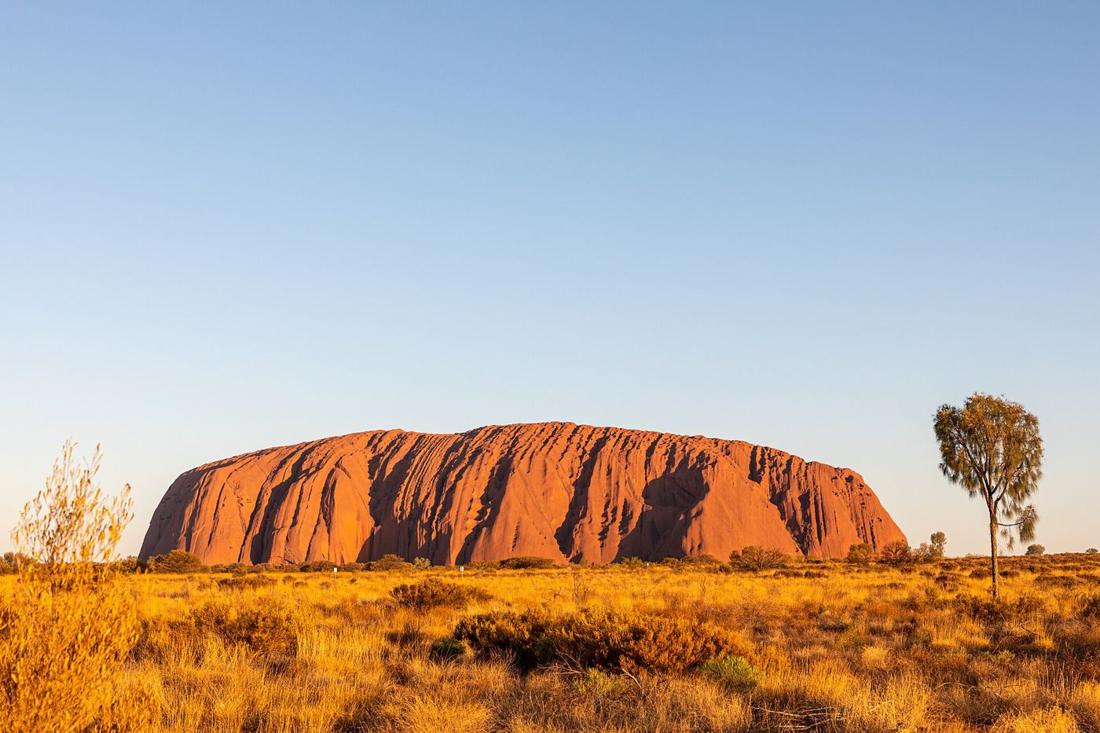
  • Songlines are paths across the land. Songs, stories and dances tell people where to find water, food and sacred places.
  • Uluru is sacred to the Anangu, its traditional owners. The climb on Uluru closed permanently on 26 October 2019.

Sources: Uluru-Kata Tjuta National Park (Parks Australia)

What you do

  1. Look at the photo of Uluru and describe it.
  2. Read the facts and explain in your own words what a songline is.
  3. Discuss: why did the climb close? What does respecting a culture mean in practice?

Sentence starters

  • A songline is…
  • The climb closed because…
  • Respecting a culture means…

Speak up

Explain a songline to a partner as if they were a tourist arriving at Uluru.

Learn how to learn · Word + picture

Draw a tiny picture next to each new word. Your brain remembers a word and an image better than a word alone.

4

Back to today: AI, copyright and artists

Connect past and present around the same question.

Documents and facts

  • Copyright protects the work of a creator, like a song or a book, for a limited time.
  • Aboriginal artists have asked for better protection of their designs and songs, which belong to communities and not to one person.

Sources: UK Intellectual Property Office: Copyright · WIPO: Traditional cultural expressions

What you do

  1. Read the two facts and complete: copyright protects… / communities want to protect…
  2. Compare: an AI copying a style and a company copying an Aboriginal design: what is the same?
  3. Prepare two arguments for and two against labelling AI songs.

Sentence starters

  • Copyright protects…
  • Like an AI, a company can…
  • Labelling AI songs is a good / bad idea because…

Speak up

Quick-fire round: each student gives one argument in 15 seconds.

Learn how to learn · Homemade flashcards

Write a question on one side and the answer on the other. Test yourself today, in 2 days and in a week.

5

Create your own game: Songline Trail

Invent a board game about places and the stories they carry.

What you do

  1. Draw a board with places (Uluru, Sydney, Arnhem Land, Darwin…). Each place has a story card.
  2. To move on, a player must retell the story in one full sentence.
  3. Write the rules with the rule starters and test them.

Sentence starters

  • If you land on…, you…
  • Each player must…
  • You win when…

Speak up

Each team explains its board in one minute.

Learn how to learn · Spaced review

Review today’s words tonight for 5 minutes, then again in 3 days. Short and spaced beats long and once.

6

Final task: should AI songs be labelled?

Defend a position with examples.

What you do

  1. Prepare a 2–3 minute oral: your position, two arguments, one example from Aboriginal culture.
  2. Practise with a partner using only keywords.
  3. Present to the class and answer one question.

Sentence starters

  • In my opinion, AI songs should…
  • For example, Yothu Yindi…
  • Some people think…, but…

Speak up

2–3 minute oral, then one question.

Learn how to learn · What I know / What I don’t know yet

Make two columns. A mistake is information: it tells you exactly what to practise next.

★ Create your own game: Songline Trail

A board game: each square is a place (Uluru, Sydney, Arnhem Land) with a story card. Players must retell the story in one sentence to move on. The whole class wins when every story has been told.

Rule-writing starters

  • The aim of the game is to…
  • Each player must…
  • If you land on…, you…
  • You win when…
  • You miss a turn if…
  • Before you start, …

Final task

Oral position (2–3 minutes, B1): “Should AI-made songs be labelled?”, with one example from Aboriginal culture.

Effort badges

Badges reward effort and progress, never a ranking. Everyone can earn every badge.

Sharp ListenerI understood a video or an audio and noted key facts.
Word HunterI collected new words and used them again.
Game DesignerI invented or improved a game.
Fair DebaterI gave an argument and listened to the other side.
Comeback BadgeI did better than last time.

✓ Assessment

How will I be assessed?

Printable grid (PDF with QR code)

DURING I practise AT THE END I show what I know

Two kinds of assessment go with you. The first one helps you improve. The second one checks what you have learnt at the end.

During the sequence: formative assessmentAt the end: summative assessment
It helps you improve.It checks what you have learnt.
You are allowed to make mistakes: a mistake you spot is a mistake you will not make again.You show what you can do, with criteria you already know.
You check your own work with the checklist.The teacher uses the same grid as you.
In this sequence: sessions 1 to 5 (the listening vote, the radio presentation, the songline explanation, the quick-fire round, Songline Trail).In this sequence: your oral position (2–3 minutes), marked out of 20.

While I practise, I can say

  • “I am not sure yet about…”
  • “Can you check if this fact is right: …?”
  • “I made a mistake with… Now I know that…”
  • “The word I want to remember is… because…”

Reminder: Printable grid (PDF with QR code) · Madame Carole Paoli Pompougnac · © 2026 · CC BY-NC-ND 4.0

⎙ Printable fiche

QR code to this journey

The one-page fiche sums up the journey: the big question, the sessions, the sentence starters, the final task and the badges. It has a QR code back to this page.

Open the printable fiche Assessment grid (PDF)

Image credits

Videos, films, songs and protected texts are not copied here: follow the links to the official sources.

Repères pour le professeur (en français)

Niveau : Seconde · CECRL visé : A2 → B1

Ancrage programme : Axe 3 « Le passé dans le présent » (la culture aborigène dans l’Australie contemporaine), en lien avec l’axe 6 « Les pays du Commonwealth »

Fil rouge : Ownership, Identity, Truth. Les blocs « Bridges » relient ce parcours aux autres parcours de la carte.

Évaluation : formative pendant les séances 1 à 5, sommative avec la tâche finale ; grille de notation et grille de correction dans l’onglet professeur du bloc d’évaluation, et en PDF avec QR code.

À noter : Images et chants sacrés : on ne montre que des documents publics (Parks Australia, NFSA). Ne pas faire reproduire de motifs aborigènes ; le jeu utilise des lieux et des récits publics.