← Map of all journeys parcours-anglais-lycee.netlify.app/seconde/can-a-hashtag-change-the-world/

The big question

Is posting enough to change society, or does real change still need people who organise, take risks and act together?

Why this journey?

Every day, millions of people post for a cause. Some campaigns change laws, others disappear in a week. In this journey, you compare movements from 1914 to 2024 to understand what makes a campaign work. At the end, you run your own campaign for a school improvement.

LevelSeconde (general)
TargetCEFR A2 → B1
Sessions6 sessions + a game + a final task
Final taskDesign a campaign poster and give a 2-minute speech for a school cause; the class votes with a secret ballot.

Bridges This journey is part of a path: each journey answers and builds on others.

⟵ Builds on…

Leads to… ⟶

Threads in this journey: VoicePowerFairness

1

The hashtag test

Invent a hashtag and ask what it can really do.

What you do

  1. In groups, invent a hashtag for a school cause (more water fountains, a quiet room, longer lunch break…).
  2. Predict: how many people will share it? Who has the power to say yes?
  3. Write two lists: what a hashtag can do / what a hashtag cannot do.

Sentence starters

  • Our hashtag is… because…
  • A hashtag can…, but…
  • The person who can really say yes is…

Speak up

Each group reads its hashtag aloud and gives one reason it could work.

Learn how to learn · Quick Recall

Before you open your notes, write 3 things you remember from last time. Then check. Testing yourself works better than reading again.
2

Deeds, not words: the suffragettes

Discover how women fought for the vote in Britain.

Documents and facts

  • Emmeline Pankhurst founded the Women’s Social and Political Union in 1903. Its motto was “Deeds, not words.”
  • In 1918, some women over 30 won the right to vote. In 1928, women got the vote on the same terms as men, at 21.

Sources: UK Parliament: Women and the vote · The National Archives: Suffragettes on file

What you do

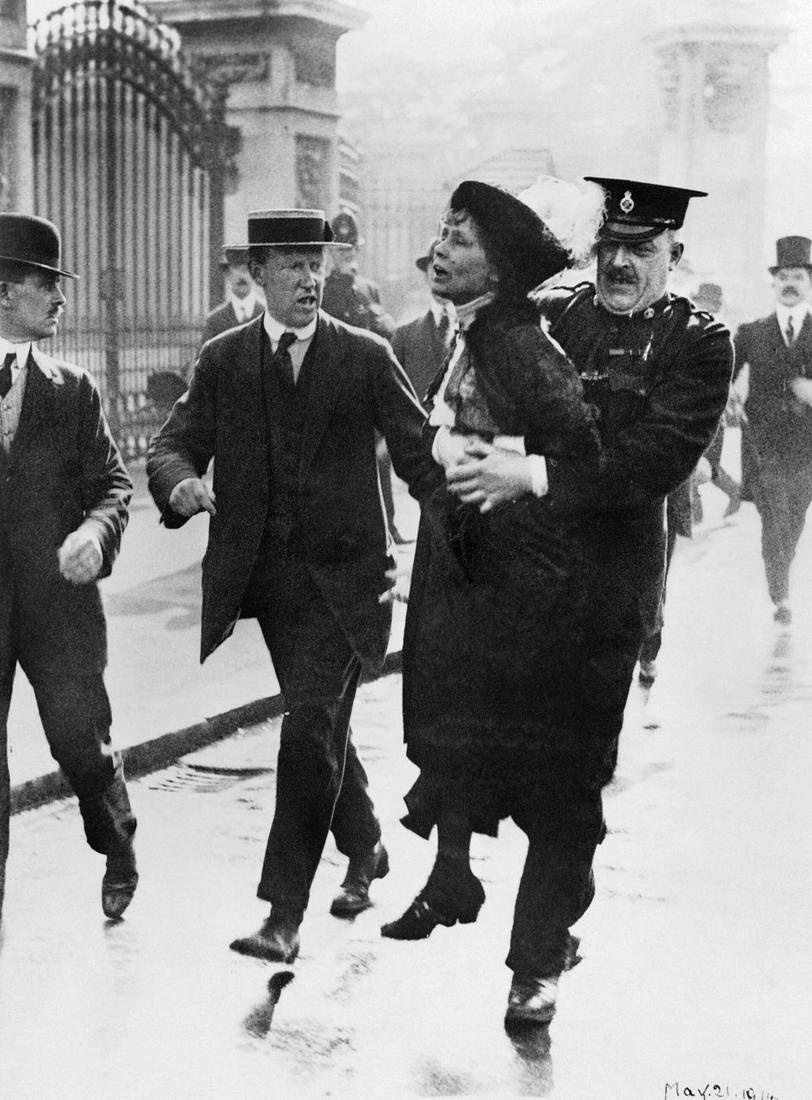
  1. Look at the photo of the arrest: who is there, what is happening, what can you guess?
  2. Read the timeline and put the events in order: 1903, 1913, 1918, 1928.
  3. Discuss: why did the suffragettes say “deeds, not words”?

Sentence starters

  • In this photo, I can see…
  • The suffragettes fought for…
  • They said “deeds, not words” because…

Speak up

Describe the photo to a partner who cannot see it, in 30 seconds.

Learn how to learn · Explain it to a partner

Explain today’s main idea to a partner in 30 seconds, without notes. If you get stuck, that is the part to review.

3

Rosa Parks and the bus boycott

See why a movement needs organisation, not only anger.

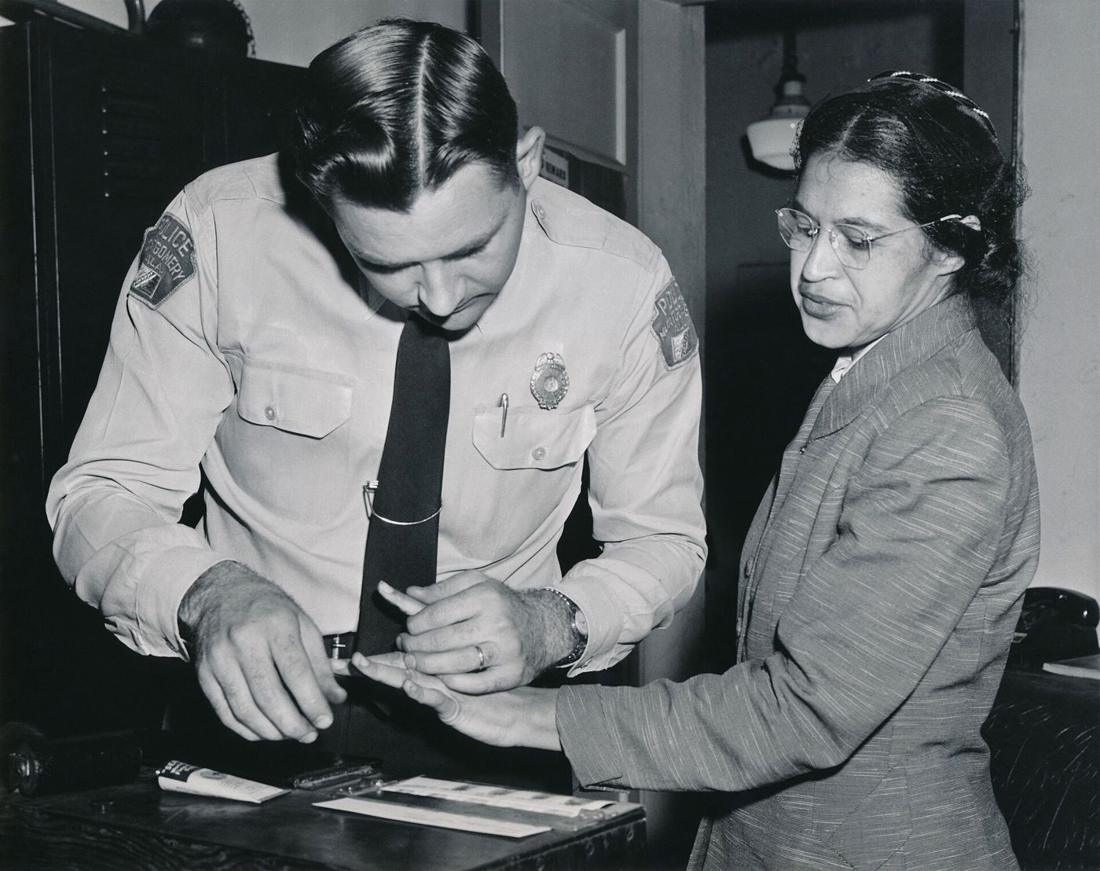
February 1956: Rosa Parks is fingerprinted after her arrest during the Montgomery bus boycott.
February 1956: Rosa Parks is fingerprinted after her arrest during the Montgomery bus boycott.Image: Gene Herrick for the Associated Press; restored by Adam Cuerden · Public domain · Wikimedia Commons

Documents and facts

  • On 1 December 1955, in Montgomery, Alabama, Rosa Parks refused to give her bus seat to a white passenger.
  • Black residents boycotted the buses for 381 days. In 1956, the Supreme Court ruled that segregation on the buses was illegal.
  • Rosa Parks later wrote: “The only tired I was, was tired of giving in.”

Sources: National Archives (US): Rosa Parks · Library of Congress: Rosa Parks Papers

What you do

  1. Read the facts and find the three ingredients of the boycott: a trigger, an organisation, a long effort.
  2. In pairs, write a short radio news flash from December 1955.
  3. Compare: what did the boycott have that a hashtag often does not?

Sentence starters

  • Rosa Parks refused to…
  • The boycott lasted… because…
  • To change a law, you need…

Speak up

Read your news flash like a radio journalist, in 30 seconds.

Learn how to learn · Word + picture

Draw a tiny picture next to each new word. Your brain remembers a word and an image better than a word alone.

4

Gen Z in Kenya: phones as megaphones

Compare an online movement of today with the old ones.

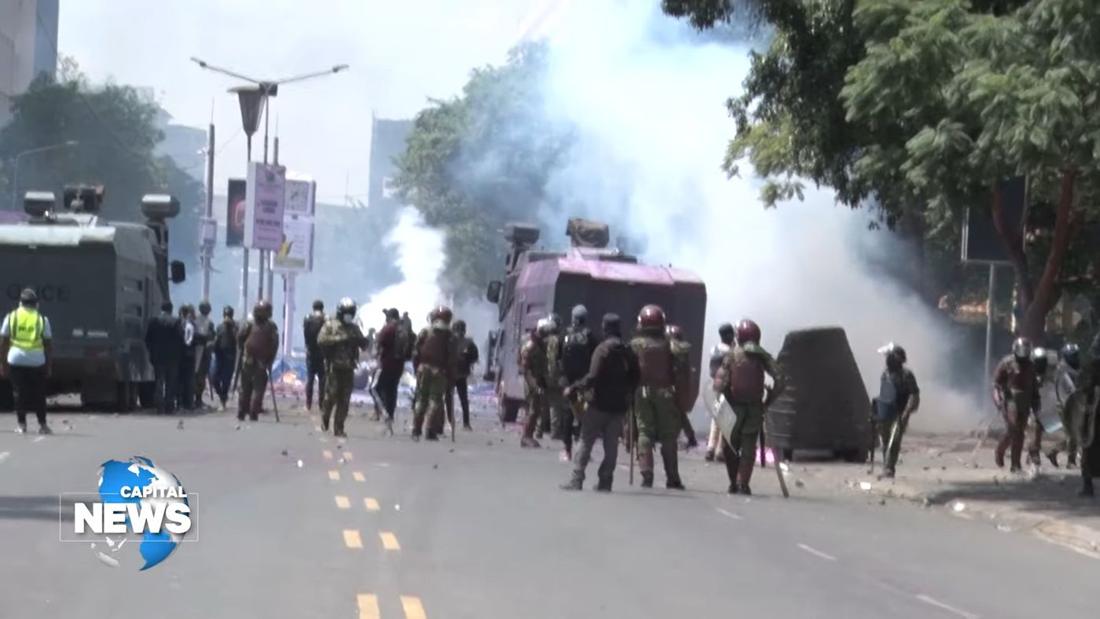
Nairobi, June 2024: young people protest against the Finance Bill.
Nairobi, June 2024: young people protest against the Finance Bill.Image: Capital FM Kenya · CC BY 3.0 · Wikimedia Commons

Documents and facts

  • In June 2024, young Kenyans used TikTok and X to organise protests against new taxes in the Finance Bill.
  • On 26 June 2024, President William Ruto withdrew the bill.

Sources: BBC News: Ruto withdraws Kenya finance bill · BBC News: the power of Gen Z

What you do

  1. Watch or read the BBC report and note: who protested, how they organised, what changed.
  2. Fill in the grid: suffragettes / Montgomery / Kenya: tools, risks, results.
  3. Discuss: is a hashtag a new tool, or a new kind of movement?

Sentence starters

  • In Kenya, young people used…
  • Like the suffragettes, they…
  • Unlike in 1914, today…

Speak up

Each student gives one similarity and one difference with an earlier movement.

Learn how to learn · Homemade flashcards

Write a question on one side and the answer on the other. Test yourself today, in 2 days and in a week.

5

Create your own game: Campaign!

Invent a strategy card game about building a movement.

What you do

  1. Make Action cards (march, petition, post, boycott, letter to an MP), Ally cards and Obstacle cards.
  2. Decide how many support points each card gives, and write the rules with the rule starters.
  3. Play once with another team and change one rule to make it fairer.

Sentence starters

  • The aim of the game is to…
  • If you draw an obstacle card, you…
  • You win when…

Speak up

Explain your game in one minute; the other team asks one question.

Learn how to learn · Spaced review

Review today’s words tonight for 5 minutes, then again in 3 days. Short and spaced beats long and once.

6

Final task: our school campaign

Design a campaign and convince the class.

What you do

  1. In teams, choose a realistic school improvement.
  2. Make a poster with a slogan and a hashtag, and prepare a 2-minute speech.
  3. The class votes with a secret ballot. Every team earns badges for effort; the vote only chooses the cause.

Sentence starters

  • Our campaign wants…
  • We will not only post, we will also…
  • Vote for our idea because…

Speak up

2-minute speech with the poster, then one question from the class.

Learn how to learn · What I know / What I don’t know yet

Make two columns. A mistake is information: it tells you exactly what to practise next.

★ Create your own game: Campaign!

A strategy card game: draw Action cards (march, petition, post, boycott), Ally cards and Obstacle cards. Your movement wins when it reaches 10 support points, but each action must be explained in a full sentence.

Rule-writing starters

  • The aim of the game is to…
  • Each player must…
  • If you land on…, you…
  • You win when…
  • You miss a turn if…
  • Before you start, …

Final task

Design a campaign poster and give a 2-minute speech for a school cause; the class votes with a secret ballot.

Effort badges

Badges reward effort and progress, never a ranking. Everyone can earn every badge.

Brave SpeakerI dared to speak in English, even with mistakes.
Team PlayerI helped my group succeed.
Game DesignerI invented or improved a game.
Rule WriterI wrote clear game rules in English.
Comeback BadgeI did better than last time.

✓ Assessment

How will I be assessed?

Printable grid (PDF with QR code)

DURING I practise AT THE END I show what I know

Two kinds of assessment go with you. The first one helps you improve. The second one checks what you have learnt at the end.

During the sequence: formative assessmentAt the end: summative assessment
It helps you improve.It checks what you have learnt.
You are allowed to make mistakes: a mistake you spot is a mistake you will not make again.You show what you can do, with criteria you already know.
You check your own work with the checklist.The teacher uses the same grid as you.
In this sequence: sessions 1 to 5 (the hashtag test, the suffragette timeline, the news flash, the comparison grid, the rules of Campaign!).In this sequence: your campaign speech (2 minutes) with your poster, marked out of 20.

While I practise, I can say

  • “I am not sure yet about…”
  • “Can you check if this fact is right: …?”
  • “I made a mistake with… Now I know that…”
  • “The word I want to remember is… because…”

Reminder: Printable grid (PDF with QR code) · Madame Carole Paoli Pompougnac · © 2026 · CC BY-NC-ND 4.0

⎙ Printable fiche

QR code to this journey

The one-page fiche sums up the journey: the big question, the sessions, the sentence starters, the final task and the badges. It has a QR code back to this page.

Open the printable fiche Assessment grid (PDF)

Image credits

Videos, films, songs and protected texts are not copied here: follow the links to the official sources.

Repères pour le professeur (en français)

Niveau : Seconde · CECRL visé : A2 → B1

Ancrage programme : Axe 4 « Défis et transitions » · objet d’étude : les formes de mobilisation populaire (des trade unions au hashtag)

Fil rouge : Voice, Power, Fairness. Les blocs « Bridges » relient ce parcours aux autres parcours de la carte.

Évaluation : formative pendant les séances 1 à 5, sommative avec la tâche finale ; grille de notation et grille de correction dans l’onglet professeur du bloc d’évaluation, et en PDF avec QR code.

À noter : Aucune cause politique partisane : la campagne finale porte sur une amélioration réaliste de l’établissement. Vote à bulletin secret, badges d’effort pour toutes les équipes.