← Map of all journeys parcours-anglais-lycee.netlify.app/premiere-bac-pro/should-16-year-olds-vote/

The big question

At what age is someone ready to choose who governs, and does voting really change anything?

Why this journey?

In July 2025, the UK government announced that it wanted to give 16- and 17-year-olds the right to vote in all UK elections. In Scotland and Wales, they can already vote in some elections. In this journey, you discover how power works in the UK, who decides what, and how the voting age has changed in history. At the end, the class organises its own election with parties, manifestos and a secret ballot.

LevelPremière bac pro
TargetCEFR A2 → B1
Sessions6 sessions + a game + a final task
Final taskSituation B training (B1): present your party’s 3 promises (3 minutes) and answer questions. Situation A training: a short news clip on votes at 16.

Bridges This journey is part of a path: each journey answers and builds on others.

⟵ Builds on…

Leads to… ⟶

Threads in this journey: PowerVoiceFairness

1

Vote now!

Vote and ask what voting changes.

What you do

  1. Secret ballot in class: “Should 16-year-olds vote?” Yes / No.
  2. Count the votes together and learn the words: ballot, polling station, candidate, majority.
  3. Discuss: what does a vote really change?

Sentence starters

  • I think 16-year-olds should / shouldn’t vote because…
  • The majority voted…
  • A vote can change…

Speak up

Each student gives one reason in one sentence.

Learn how to learn · Quick Recall

Before you open your notes, write 3 things you remember from last time. Then check. Testing yourself works better than reading again.
2

The news, July 2025

Understand the reform and the debate.

Documents and facts

  • On 17 July 2025, the UK government announced plans to lower the voting age to 16 for all UK elections.
  • Supporters say young people pay taxes when they work, can join the army at 16 and should have a say. Opponents say 16 is too young and that the age of adulthood is 18.
  • In February 2026, the Representation of the People Bill, which includes votes at 16, was introduced in Parliament.

Sources: GOV.UK: 16 year olds to be given right to vote (17 July 2025) · House of Commons Library: Representation of the People Bill, progress

What you do

  1. Read the facts and sort the arguments: for / against.
  2. Situation A training: watch a short official news clip and note 5 key facts.
  3. Add one argument of your own to each side.

Sentence starters

  • Supporters say that…
  • Opponents think that…
  • I would add that…

Speak up

Present one argument for and one against.

Learn how to learn · Explain it to a partner

Explain today’s main idea to a partner in 30 seconds, without notes. If you get stuck, that is the part to review.

3

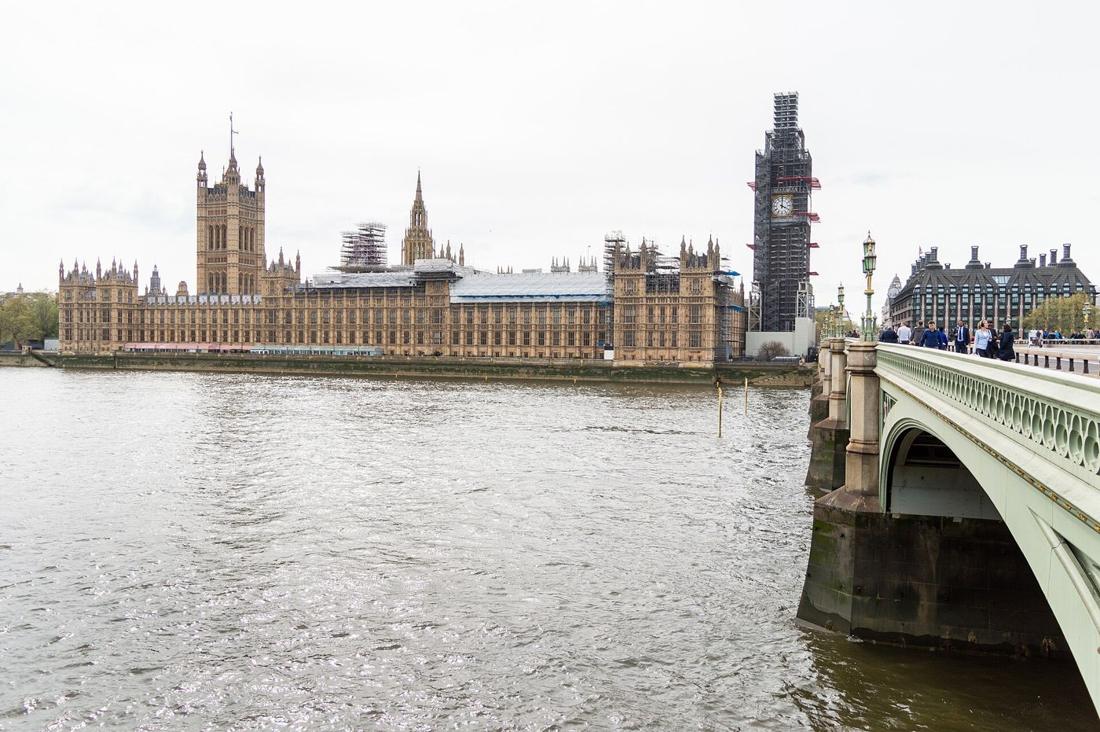
Inside Westminster

Learn who decides what in the UK.

Documents and facts

  • The UK Parliament has two houses: the House of Commons (650 elected MPs) and the House of Lords (not elected).
  • The Prime Minister leads the government. The King is the head of state but does not make political decisions.
  • A bill becomes a law after votes in both houses and Royal Assent.

Sources: UK Parliament: How Parliament works · UK Parliament Education

What you do

  1. Complete the diagram: King, Prime Minister, Commons, Lords, voters.
  2. Put the steps of a law in order.
  3. Professional situation: you are a guide at Westminster. Prepare a 1-minute welcome for visitors.

Sentence starters

  • The Prime Minister is…
  • The House of Commons…
  • A bill becomes a law when…

Speak up

Give your 1-minute guided tour.

Learn how to learn · Word + picture

Draw a tiny picture next to each new word. Your brain remembers a word and an image better than a word alone.

4

Four nations, different rules

Compare voting rules in the UK nations and in history.

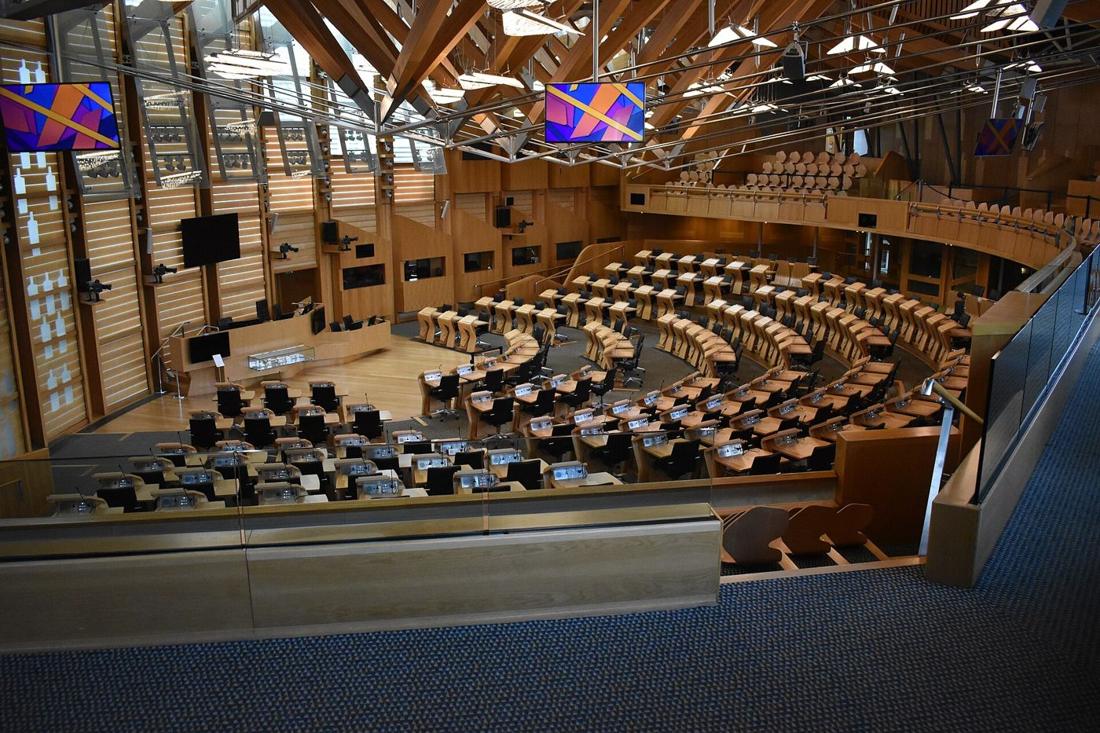
The debating chamber of the Scottish Parliament, Edinburgh.
The debating chamber of the Scottish Parliament, Edinburgh.Image: S. Perquin · CC BY-SA 4.0 · Wikimedia Commons
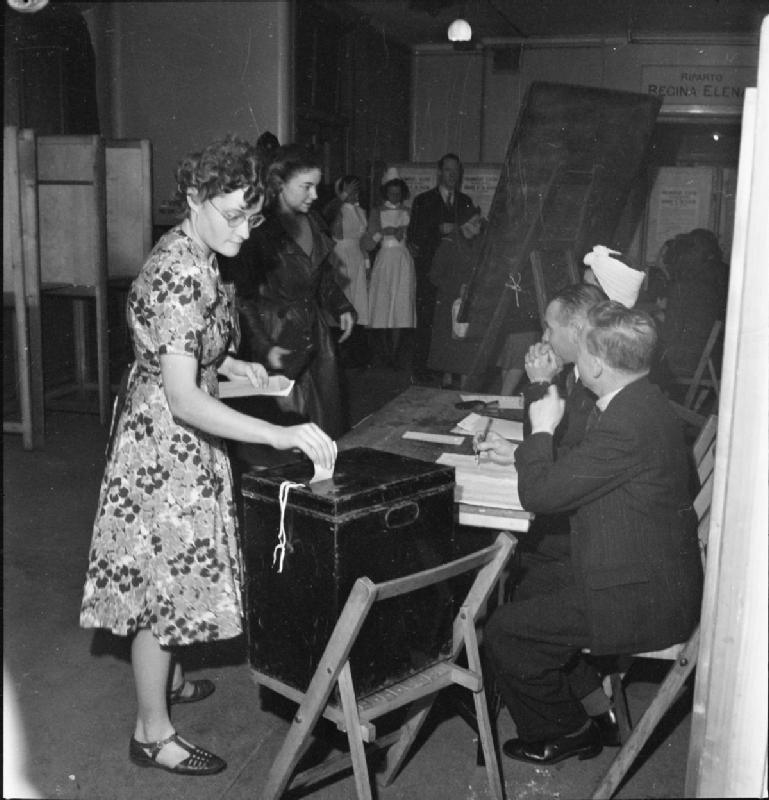
London, 5 July 1945: voters at a polling station.
London, 5 July 1945: voters at a polling station.Image: Ministry of Information Photo Division Photographer · Public domain · Wikimedia Commons

Documents and facts

  • 16-year-olds in Scotland voted in the independence referendum of 2014. Since 2015, they can vote in Scottish Parliament and local elections.
  • In Wales, 16-year-olds have voted in Senedd elections since 2021.
  • In 1969, the UK lowered the voting age from 21 to 18.

Sources: GOV.UK: Types of election and who can vote · Senedd Cymru: Votes at 16

What you do

  1. Look at the 1945 photo and the Holyrood photo: what changed?
  2. Make a timeline: 1918, 1928, 1969, 2014, 2021, 2025.
  3. Discuss: is it fair that the rules are different in each nation?

Sentence starters

  • In Scotland,…
  • In 1969,…
  • It is fair / unfair because…

Speak up

Present the timeline in 45 seconds.

Learn how to learn · Homemade flashcards

Write a question on one side and the answer on the other. Test yourself today, in 2 days and in a week.

5

Create your own game: Election Day

Invent a role-play where parties campaign and citizens vote.

What you do

  1. Make party cards (name, colour, slogan) and citizen cards (each with one priority: jobs, transport, climate, sport…).
  2. Rule: each party has one minute to convince; secret ballot at the end.
  3. Write the rules with the rule starters and test them.

Sentence starters

  • Each party must…
  • Citizens vote for…
  • You win when…

Speak up

Play one round in front of the class.

Learn how to learn · Spaced review

Review today’s words tonight for 5 minutes, then again in 3 days. Short and spaced beats long and once.

6

Final task: class election

Present a manifesto and vote.

What you do

  1. In groups, create a party with 3 promises for young people.
  2. Present your manifesto (3 minutes, Situation B training) and answer questions.
  3. Secret ballot: every party gets badges for effort; the vote only chooses the ideas.

Sentence starters

  • If we were elected, we would…
  • Our first promise is…
  • Vote for us because…

Speak up

3-minute manifesto, then questions.

Learn how to learn · What I know / What I don’t know yet

Make two columns. A mistake is information: it tells you exactly what to practise next.

★ Create your own game: Election Day

A role-play: party cards and citizen cards with one priority each. Each party has one minute to convince; secret ballot at the end.

Rule-writing starters

  • The aim of the game is to…
  • Each player must…
  • If you land on…, you…
  • You win when…
  • You miss a turn if…
  • Before you start, …

Final task

Situation B training (B1): present your party’s 3 promises (3 minutes) and answer questions. Situation A training: a short news clip on votes at 16.

Effort badges

Badges reward effort and progress, never a ranking. Everyone can earn every badge.

Brave SpeakerI dared to speak in English, even with mistakes.
Fair DebaterI gave an argument and listened to the other side.
Game DesignerI invented or improved a game.
Team PlayerI helped my group succeed.
Comeback BadgeI did better than last time.

✓ Assessment

How will I be assessed?

Printable grid (PDF with QR code)

DURING I practise AT THE END I show what I know

Two kinds of assessment go with you. The first one helps you improve. The second one checks what you have learnt at the end.

During the sequence: formative assessmentAt the end: summative assessment
It helps you improve.It checks what you have learnt.
You are allowed to make mistakes: a mistake you spot is a mistake you will not make again.You show what you can do, with criteria you already know.
You check your own work with the checklist.The teacher uses the same grid as you.
In this sequence: sessions 1 to 5 (the class vote, the arguments, the Westminster tour, the timeline, Election Day).In this sequence: your manifesto presentation (3 minutes) and answers, marked out of 20.

While I practise, I can say

  • “I am not sure yet about…”
  • “Can you check if this fact is right: …?”
  • “I made a mistake with… Now I know that…”
  • “The word I want to remember is… because…”

Reminder: Printable grid (PDF with QR code) · Madame Carole Paoli Pompougnac · © 2026 · CC BY-NC-ND 4.0

⎙ Printable fiche

QR code to this journey

The one-page fiche sums up the journey: the big question, the sessions, the sentence starters, the final task and the badges. It has a QR code back to this page.

Open the printable fiche Assessment grid (PDF)

Image credits

Videos, films, songs and protected texts are not copied here: follow the links to the official sources.

Repères pour le professeur (en français)

Niveau : Première bac pro · CECRL visé : A2 → B1

Ancrage programme : Voie professionnelle (BO spécial n° 5 du 11 avril 2019) · thèmes : lieux emblématiques du pouvoir ; institutions et système politique ; réformes institutionnelles en cours ; élections · entraînement Situation A et B

Fil rouge : Power, Voice, Fairness. Les blocs « Bridges » relient ce parcours aux autres parcours de la carte.

Évaluation : formative pendant les séances 1 à 5, sommative avec la tâche finale ; grille de notation et grille de correction dans l’onglet professeur du bloc d’évaluation, et en PDF avec QR code.

À noter : Aucune opinion partisane demandée ; partis fictifs. Vérifier l’état du projet de loi sur le vote à 16 ans avant la séance (annonce du 17 juillet 2025).