← Map of all journeys parcours-anglais-lycee.netlify.app/terminale/cancelled-in-one-day/

The big question

When a crowd judges faster than a court, how can we protect both justice and the truth?

Why this journey?

Online, a clip can go around the world in a few hours, and thousands of strangers can decide that someone is guilty. This is not new. In 1692, a whole town in Massachusetts accused its neighbours of witchcraft. In this journey, you study Salem, Arthur Miller’s play The Crucible, the McCarthy era and the film 12 Angry Men, to understand how group pressure works and how to resist it. At the end, you write an essay: is social media the new Salem?

LevelTerminale (general)
TargetCEFR B2
Sessions6 sessions + a game + a final task
Final taskEssay (about 300 words, B2) and 5-minute oral: “Is social media the new Salem?”

Bridges This journey is part of a path: each journey answers and builds on others.

⟵ Builds on…

Leads to… ⟶

Threads in this journey: TruthPowerVoiceFairness

1

Private moment, public trial

Ask how a crowd judges online.

Documents and facts

  • A 2018 study by MIT researchers, published in Science, found that false news on Twitter spread farther and faster than true news; false stories were 70% more likely to be retweeted.

Sources: MIT News: false news spreads faster than the truth (2018)

What you do

  1. Your teacher describes an invented case: a short clip of a stranger goes viral with an angry caption.
  2. In groups, list what the crowd knows, what it does not know, and what it decides.
  3. Read the MIT finding and discuss why false stories travel faster.

Sentence starters

  • The crowd knows…, but it does not know…
  • A rumour becomes dangerous when…
  • False news spreads faster because…

Speak up

Each group gives its conclusion in 30 seconds.

Learn how to learn · Quick Recall

Before you open your notes, write 3 things you remember from last time. Then check. Testing yourself works better than reading again.
2

Salem, 1692

Discover how a community turned on itself.

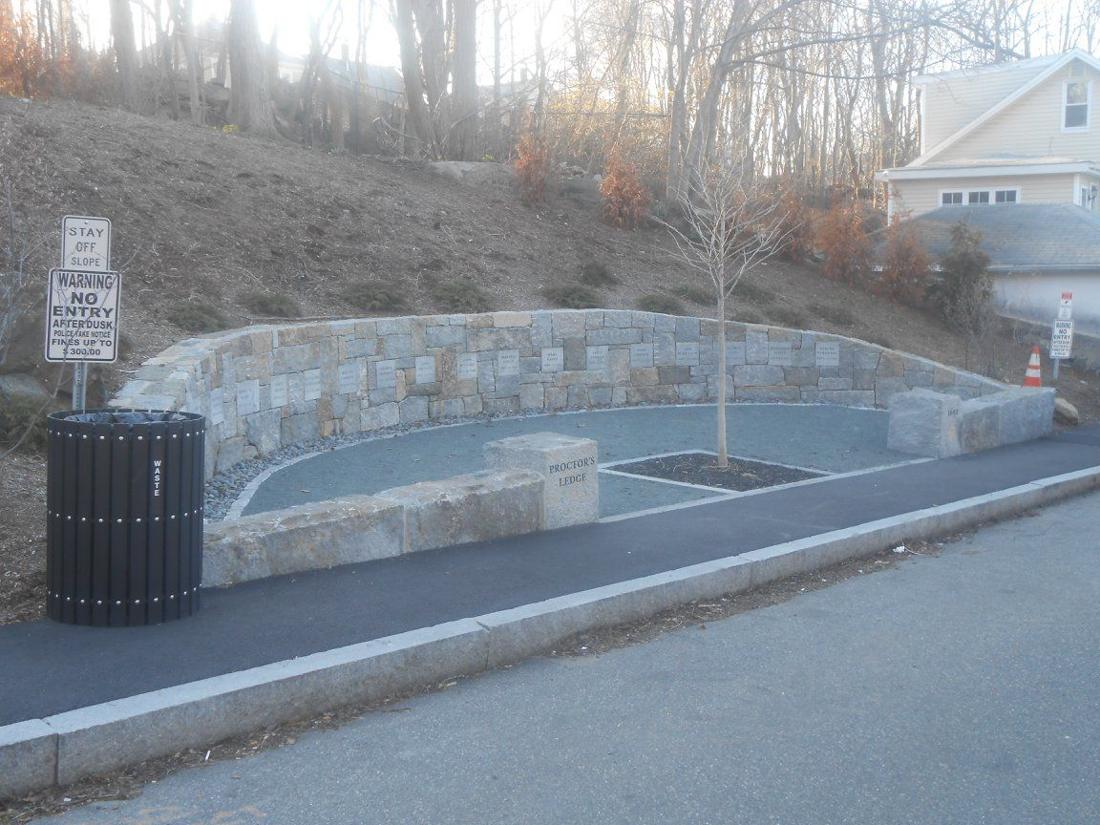
Proctor’s Ledge Memorial, Salem: the place where victims of 1692 were hanged.
Proctor’s Ledge Memorial, Salem: the place where victims of 1692 were hanged.Image: Jangseung92 · CC BY-SA 4.0 · Wikimedia Commons

Documents and facts

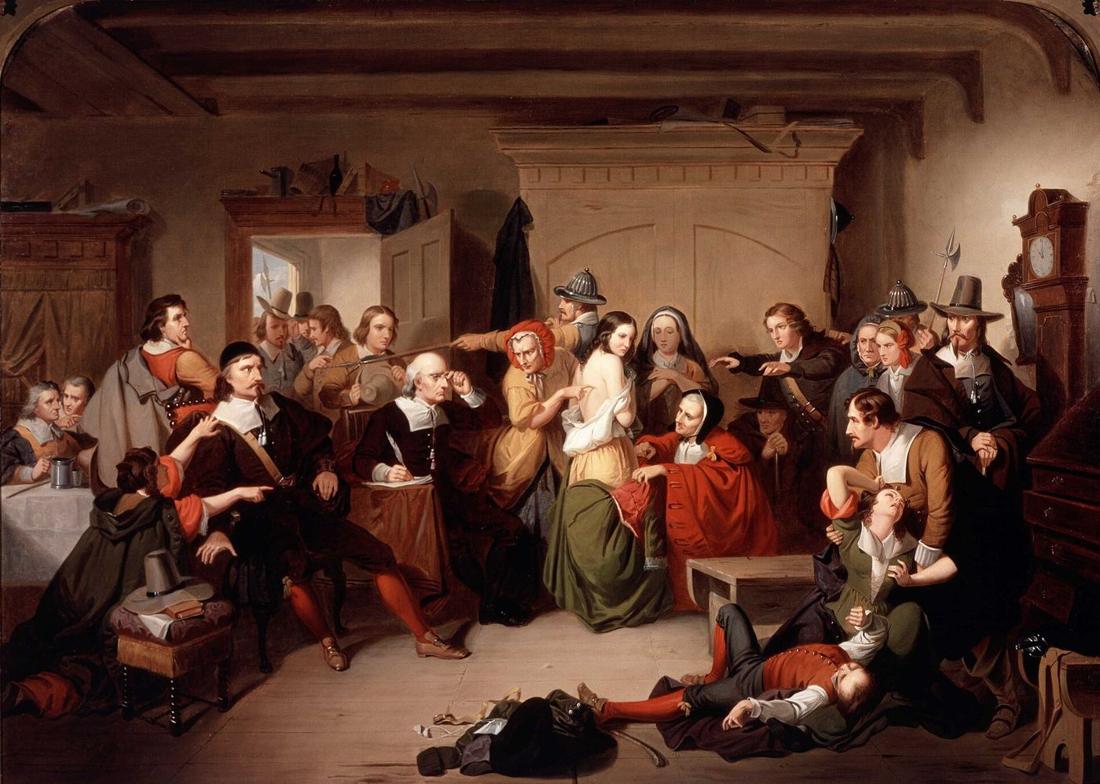
  • In 1692, in Salem, Massachusetts, more than 200 people were accused of witchcraft.
  • Nineteen people were hanged; Giles Corey was pressed to death with heavy stones.
  • In 2022, Massachusetts officially cleared the last convicted person, Elizabeth Johnson Jr.

Sources: Salem Witch Trials Documentary Archive (University of Virginia) · Smithsonian Magazine: The Salem witch trials

What you do

  1. Look at Matteson’s painting: who accuses, who is accused, who watches?
  2. Read the facts and find the role of fear, rumour and silence.
  3. Write a short court report from 1692 (past tense, characters only).

Sentence starters

  • In Salem, people were accused of…
  • The crowd believed… because…
  • Nobody dared to…

Speak up

Read your court report aloud as a clerk of 1692.

Learn how to learn · Explain it to a partner

Explain today’s main idea to a partner in 30 seconds, without notes. If you get stuck, that is the part to review.

3

The Crucible and McCarthy

See how a writer used Salem to talk about his own time.

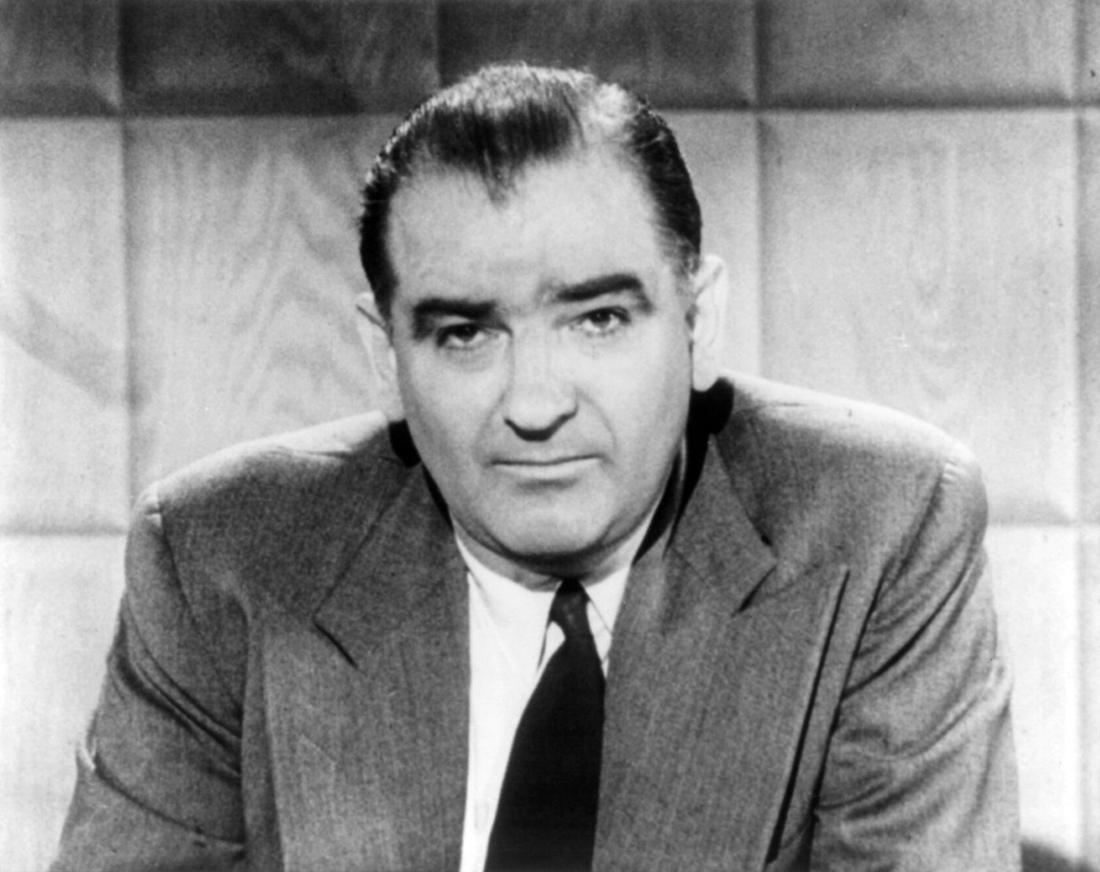
Senator Joseph McCarthy, around 1954.
Senator Joseph McCarthy, around 1954.Image: United Press · Public domain · Wikimedia Commons

Documents and facts

  • In February 1950, Senator Joseph McCarthy claimed that communists worked inside the US government. Many people lost their jobs after accusations without proof.
  • In 1953, Arthur Miller’s play The Crucible told the story of Salem to criticise this climate of fear.
  • On 9 June 1954, the lawyer Joseph Welch asked McCarthy: “Have you no sense of decency, sir, at long last?”

Sources: US Senate: “Have You No Sense of Decency?” · The New Yorker: Arthur Miller, “Why I Wrote The Crucible” (1996)

What you do

  1. Read the facts and draw a parallel: Salem 1692 / Washington 1950s.
  2. Read Miller’s explanation (link) and find one reason why he chose Salem.
  3. Role-play: Welch’s question in a hearing; the class discusses why one sentence could change public opinion.

Sentence starters

  • Miller chose Salem because…
  • Like in Salem, in the 1950s…
  • One sentence can change opinion when…

Speak up

Perform the hearing in pairs, then explain the parallel in one minute.

Learn how to learn · Word + picture

Draw a tiny picture next to each new word. Your brain remembers a word and an image better than a word alone.

4

12 Angry Men: one against eleven

Understand how to resist group pressure.

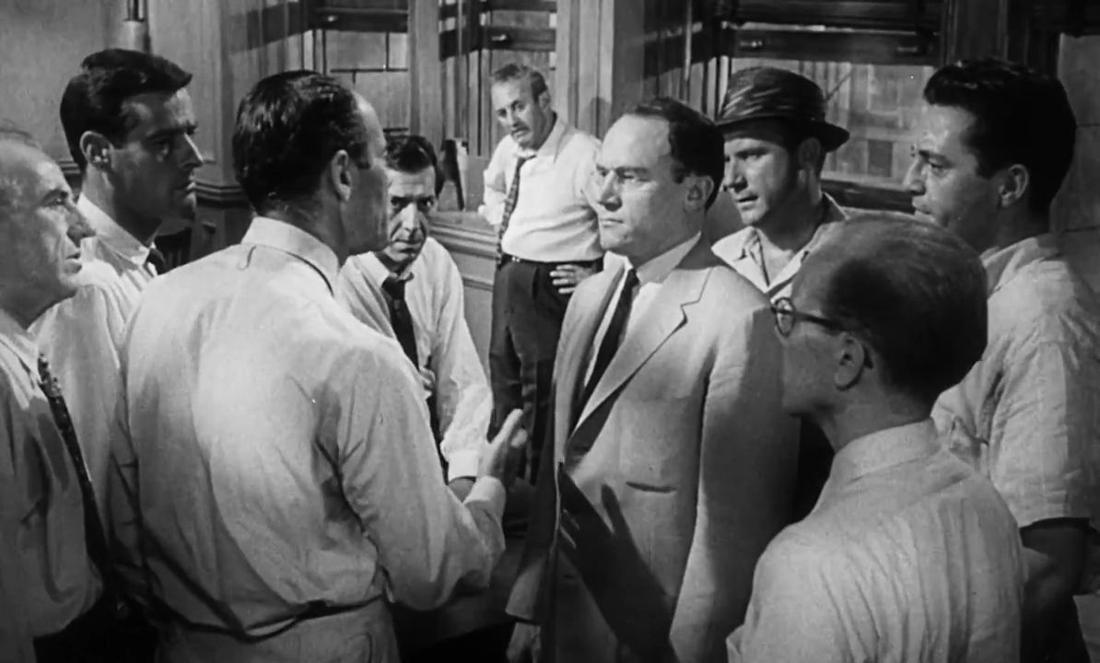
A scene from 12 Angry Men (1957), directed by Sidney Lumet.
A scene from 12 Angry Men (1957), directed by Sidney Lumet.Image: Movie directed by Sidney Lumet, adapted from a teleplay of the same name by Reginald Rose. · Public domain · Wikimedia Commons

Documents and facts

  • In 12 Angry Men (1957), twelve jurors must decide if a young man is guilty of murder. Eleven vote guilty at first.
  • Juror 8, played by Henry Fonda, is not sure. He asks the others to look at the evidence again. Step by step, they change their minds.

Sources: Library of Congress: National Film Registry

What you do

  1. Watch the official trailer or a short scene chosen by your teacher.
  2. List the strategies Juror 8 uses: questions, evidence, patience.
  3. Debate: is it harder to resist a crowd in a jury room or online?

Sentence starters

  • Juror 8 refuses to…
  • He convinces the others by…
  • Online, it is harder / easier because…

Speak up

One-minute statement: “What I would learn from Juror 8.”

Learn how to learn · Homemade flashcards

Write a question on one side and the answer on the other. Test yourself today, in 2 days and in a week.

5

Create your own game: The Jury

Invent a card game where evidence and rumour compete.

What you do

  1. Make Evidence cards (a receipt, a video timestamp, a witness) and Rumour cards (an angry post, a screenshot without date).
  2. Rule: before the jury votes, a player must say which card is evidence and which is rumour, and why.
  3. Write the rules with the rule starters and test them.

Sentence starters

  • You miss a turn if…
  • Each player must…
  • The jury wins when…

Speak up

Play one case in front of the class.

Learn how to learn · Spaced review

Review today’s words tonight for 5 minutes, then again in 3 days. Short and spaced beats long and once.

6

Final task: is social media the new Salem?

Write a structured essay and defend it.

What you do

  1. Write about 300 words with an introduction, two parts and a conclusion.
  2. Use at least three documents of the journey.
  3. Present your thesis in a 5-minute oral and answer questions.

Sentence starters

  • Social media can act like…
  • However, unlike in 1692,…
  • To conclude,…

Speak up

5-minute oral, then questions.

Learn how to learn · What I know / What I don’t know yet

Make two columns. A mistake is information: it tells you exactly what to practise next.

★ Create your own game: The Jury

A card game: each round mixes Evidence cards and Rumour cards. A player must say which is which, and why, before the jury votes.

Rule-writing starters

  • The aim of the game is to…
  • Each player must…
  • If you land on…, you…
  • You win when…
  • You miss a turn if…
  • Before you start, …

Final task

Essay (about 300 words, B2) and 5-minute oral: “Is social media the new Salem?”

Effort badges

Badges reward effort and progress, never a ranking. Everyone can earn every badge.

Fact CheckerI checked a source or spotted a fake.
Fair DebaterI gave an argument and listened to the other side.
Game DesignerI invented or improved a game.
Brave SpeakerI dared to speak in English, even with mistakes.
Comeback BadgeI did better than last time.

✓ Assessment

How will I be assessed?

Printable grid (PDF with QR code)

DURING I practise AT THE END I show what I know

Two kinds of assessment go with you. The first one helps you improve. The second one checks what you have learnt at the end.

During the sequence: formative assessmentAt the end: summative assessment
It helps you improve.It checks what you have learnt.
You are allowed to make mistakes: a mistake you spot is a mistake you will not make again.You show what you can do, with criteria you already know.
You check your own work with the checklist.The teacher uses the same grid as you.
In this sequence: sessions 1 to 5 (the invented case, the court report, the hearing role-play, the Juror 8 statement, The Jury).In this sequence: your essay (about 300 words), marked out of 20.

While I practise, I can say

  • “I am not sure yet about…”
  • “Can you check if this fact is right: …?”
  • “I made a mistake with… Now I know that…”
  • “The word I want to remember is… because…”

Reminder: Printable grid (PDF with QR code) · Madame Carole Paoli Pompougnac · © 2026 · CC BY-NC-ND 4.0

⎙ Printable fiche

QR code to this journey

The one-page fiche sums up the journey: the big question, the sessions, the sentence starters, the final task and the badges. It has a QR code back to this page.

Open the printable fiche Assessment grid (PDF)

Image credits

Videos, films, songs and protected texts are not copied here: follow the links to the official sources.

Repères pour le professeur (en français)

Niveau : Terminale · CECRL visé : B2

Ancrage programme : Axe « Espace privé et espace public » · objet d’étude : les chasses aux sorcières, de Salem à Hollywood, le tribunal médiatique

Fil rouge : Truth, Power, Voice, Fairness. Les blocs « Bridges » relient ce parcours aux autres parcours de la carte.

Évaluation : formative pendant les séances 1 à 5, sommative avec la tâche finale ; grille de notation et grille de correction dans l’onglet professeur du bloc d’évaluation, et en PDF avec QR code.

À noter : Cas viraux réels non nommés : on travaille sur des cas inventés pour ne mettre en cause aucune personne privée. Bande-annonce de 12 Angry Men : lien seulement.