← Map of all journeys parcours-anglais-lycee.netlify.app/seconde/old-stories-new-voices/

The big question

If a story is retold again and again, does it still belong to its first author, or to every new generation that tells it?

Why this journey?

Many films and songs you love are retellings of very old stories. In this journey, you find out why some stories never die, what changes when a new voice tells them, and who gets to be the hero. At the end, your team invents and pitches its own remake.

LevelSeconde (general)
TargetCEFR A2 → B1
Sessions6 sessions + a game + a final task
Final taskTeam pitch of a remake (3 minutes, B1): the old story, the new setting, the new hero, and why it speaks to teens today.

Bridges This journey is part of a path: each journey answers and builds on others.

⟵ Builds on…

Leads to… ⟶

Threads in this journey: IdentityOwnershipVoice

1

Remake, sequel or retelling?

Sort stories and find out why we retell them.

Documents and facts

  • A remake tells the same story again in the same world. A sequel continues it. A retelling moves the story to a new place, time or point of view.
  • Romeo and Juliet was written by William Shakespeare around 1595. It has been adapted into ballets, musicals, films and songs for more than 400 years.

What you do

  1. In groups, sort the titles your teacher gives you into three boxes: remake, sequel, retelling.
  2. Choose one title and explain to the class which old story is hidden inside it.
  3. Vote: which feeling makes a story travel through time? Love, fear, revenge, family, freedom?

Sentence starters

  • I think this is a remake because…
  • The old story inside it is…
  • What makes this story travel through time is…

Speak up

Each group gives one sentence to the class: “This story is still told today because…”

Learn how to learn · Quick Recall

Before you open your notes, write 3 things you remember from last time. Then check. Testing yourself works better than reading again.
2

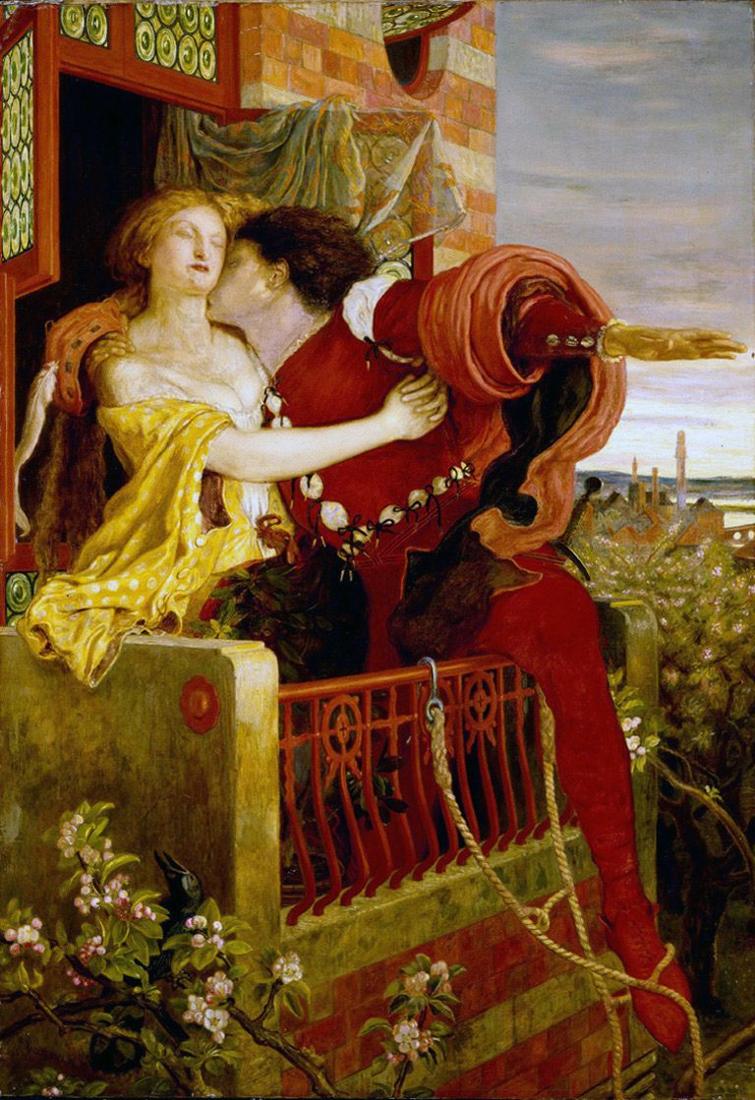
Romeo and Juliet: the original

Understand the original story and its universal feelings.

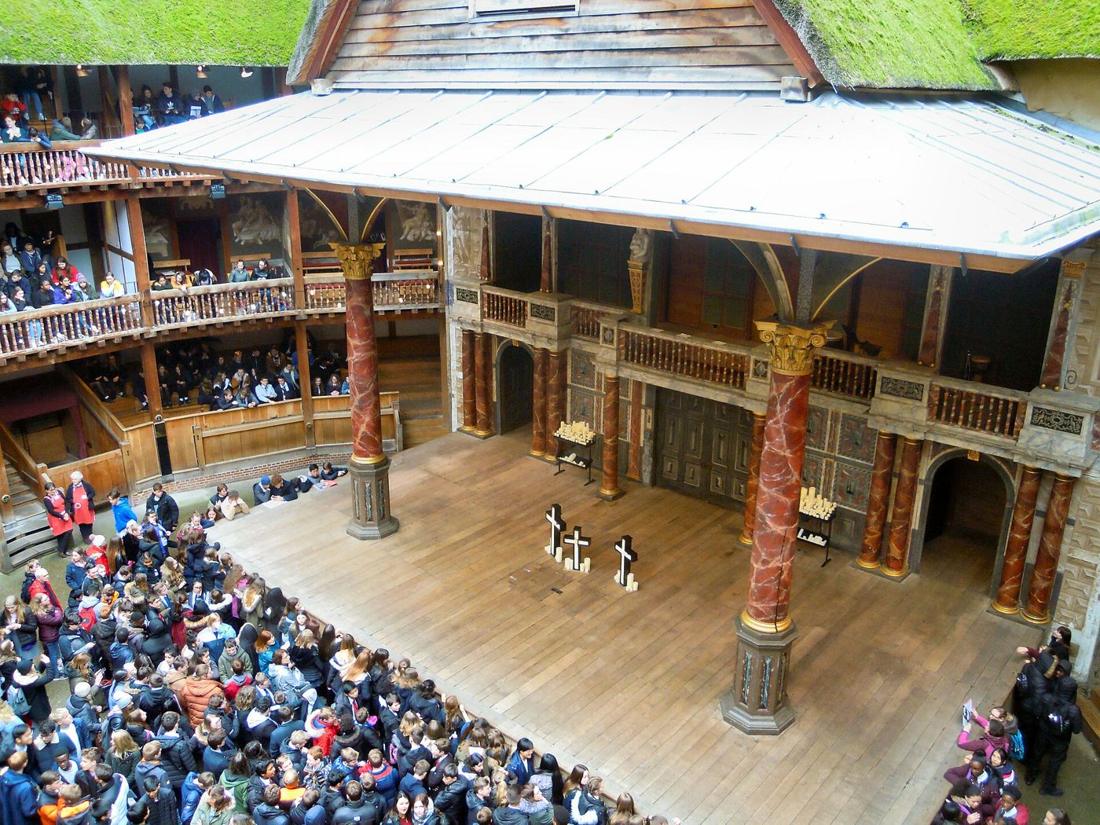
Romeo and Juliet on stage at Shakespeare’s Globe, London, 2019.
Romeo and Juliet on stage at Shakespeare’s Globe, London, 2019.Image: Jack1956 · CC0 · Wikimedia Commons

Documents and facts

  • Two young people fall in love, but their families, the Montagues and the Capulets, are enemies.
  • Juliet says: “What’s in a name? That which we call a rose / By any other name would smell as sweet.” (Act 2, Scene 2)

Sources: The text of the play (Folger Shakespeare Library) · Shakespeare’s Globe: Romeo and Juliet

What you do

  1. Read the balcony lines with a partner, first in a whisper, then with feeling.
  2. Find what Juliet means: is a name, a family, a group more important than the person?
  3. Mime the scene in three still images; the class guesses each moment.

Sentence starters

  • Juliet means that…
  • A name is not important because…
  • In this scene, I can feel…

Speak up

Read two lines aloud with expression. The class gives one tip, never a judgement.

Learn how to learn · Explain it to a partner

Explain today’s main idea to a partner in 30 seconds, without notes. If you get stuck, that is the part to review.

3

West Side Story: same story, new streets

See how a retelling mirrors its own time.

Documents and facts

  • West Side Story moved Romeo and Juliet to the streets of New York: the Jets and the Sharks, two rival gangs. It opened on Broadway in 1957.
  • The 1961 film won 10 Oscars. Steven Spielberg directed a new version in 2021.
  • Rita Moreno won an Oscar for the role of Anita in 1962. Sixty years later, Ariana DeBose won an Oscar for the same role.

Sources: West Side Story (2021) official page, 20th Century Studios

What you do

  1. Fill in the comparison grid: Verona or New York? Families or gangs? Swords or…?
  2. Watch the official trailer (link only) and note three things that changed and one that stayed the same.
  3. Discuss: why did the writers choose gangs and immigration in 1950s New York?

Sentence starters

  • The setting has changed from… to…
  • What stays the same is…
  • The writers wanted to show that…

Speak up

In pairs, present one change and one thing that stayed the same, in 45 seconds.

Learn how to learn · Word + picture

Draw a tiny picture next to each new word. Your brain remembers a word and an image better than a word alone.

4

Who gets to wear the hat? The cowboy myth

Find out how a myth changes when new voices tell it.

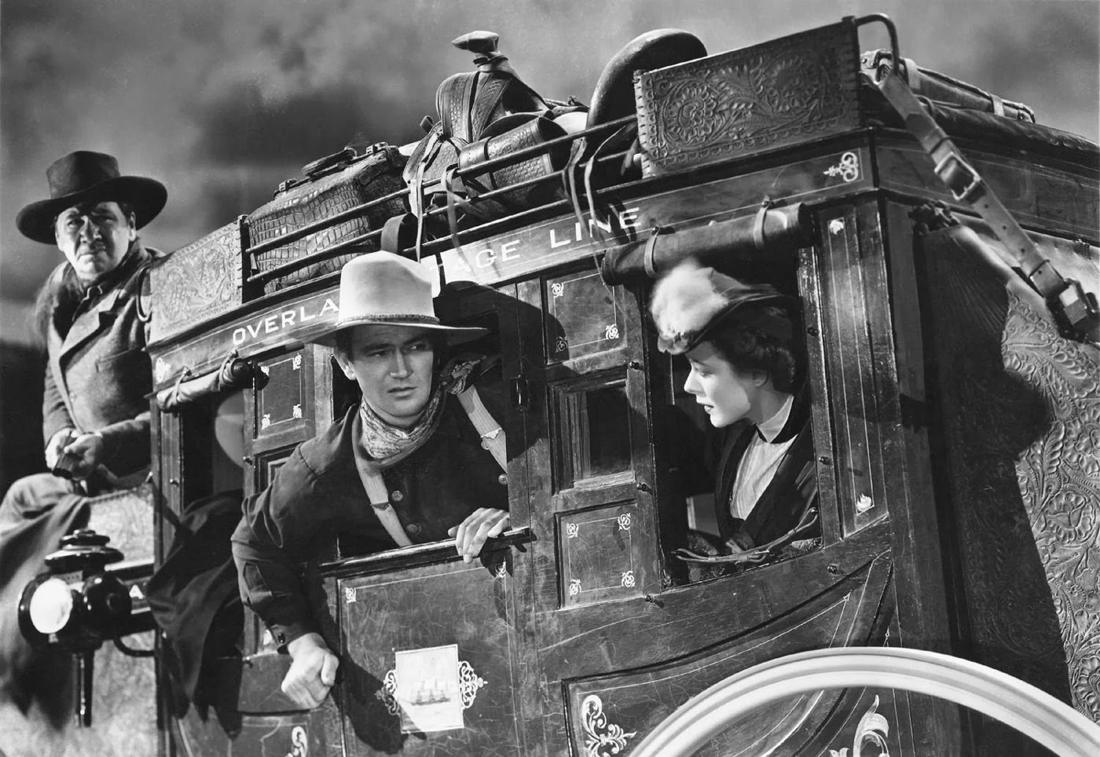
Poster of Stagecoach (1939), the western that made John Wayne a star.
Poster of Stagecoach (1939), the western that made John Wayne a star.Image: United Artists · Public domain · Wikimedia Commons

Documents and facts

  • For decades, Hollywood westerns showed the cowboy as a white man, like John Wayne in Stagecoach (1939).
  • Historians estimate that about one cowboy in four in the American West was Black.
  • In February 2025, Beyoncé’s album Cowboy Carter won the Grammy for Album of the Year and Best Country Album.

Sources: Smithsonian Magazine: The lesser-known history of African-American cowboys · Recording Academy: 67th Grammy Awards winners

What you do

  1. Look at the poster: who is the hero? Who is missing?
  2. Read the Smithsonian facts and find two people the old westerns forgot.
  3. Debate in small groups: does retelling a myth fix the past, or change the story?

Sentence starters

  • In the old westerns, the hero was…
  • The people who were forgotten are…
  • When a new voice tells the story,…

Speak up

Mini-debate: one minute for each side, then the class asks one question.

Learn how to learn · Homemade flashcards

Write a question on one side and the answer on the other. Test yourself today, in 2 days and in a week.

5

Create your own game: Remix It!

Invent a card game that mixes classic stories with new settings and heroes.

What you do

  1. In teams, make three piles of cards: Classic (Romeo and Juliet, Cinderella, Robin Hood…), Setting (space station, online game, desert town…), Hero (a grandmother, a robot, a girl who does not speak…).
  2. Write the rules in English with the rule starters.
  3. Test your game with another team and improve one rule.

Sentence starters

  • The aim of the game is to…
  • Each player must…
  • You win when…

Speak up

Each team explains its rules in one minute; another team repeats them to check they are clear.

Learn how to learn · Spaced review

Review today’s words tonight for 5 minutes, then again in 3 days. Short and spaced beats long and once.

6

Final task: pitch your remake

Pitch your own remake to the class.

What you do

  1. Draw one card from each pile, or choose your own mix.
  2. Prepare a 3-minute pitch: the old story, the new setting, the new hero, and why it speaks to teens today.
  3. Every team receives a badge for its effort; the class says what it liked best in each pitch.

Sentence starters

  • Our remake is about…
  • We kept… but we changed…
  • Teens today will love it because…

Speak up

Team pitch, 3 minutes, then two questions from the class.

Learn how to learn · What I know / What I don’t know yet

Make two columns. A mistake is information: it tells you exactly what to practise next.

★ Create your own game: Remix It!

A card game: draw one Classic card, one Setting card and one Hero card. You have 60 seconds to pitch the remake. The other players ask one question; if you answer in a full sentence, you keep the cards.

Rule-writing starters

  • The aim of the game is to…
  • Each player must…
  • If you land on…, you…
  • You win when…
  • You miss a turn if…
  • Before you start, …

Final task

Team pitch of a remake (3 minutes, B1): the old story, the new setting, the new hero, and why it speaks to teens today.

Effort badges

Badges reward effort and progress, never a ranking. Everyone can earn every badge.

Story TellerI retold a story or a life in English.
Brave SpeakerI dared to speak in English, even with mistakes.
Game DesignerI invented or improved a game.
Team PlayerI helped my group succeed.
Comeback BadgeI did better than last time.

✓ Assessment

How will I be assessed?

Printable grid (PDF with QR code)

DURING I practise AT THE END I show what I know

Two kinds of assessment go with you. The first one helps you improve. The second one checks what you have learnt at the end.

During the sequence: formative assessmentAt the end: summative assessment
It helps you improve.It checks what you have learnt.
You are allowed to make mistakes: a mistake you spot is a mistake you will not make again.You show what you can do, with criteria you already know.
You check your own work with the checklist.The teacher uses the same grid as you.
In this sequence: sessions 1 to 5 (the sorting game, the balcony reading, the West Side Story grid, the cowboy mini-debate, the rules of Remix It!).In this sequence: your team pitch (3 minutes), marked out of 20.

While I practise, I can say

  • “I am not sure yet about…”
  • “Can you check if this fact is right: …?”
  • “I made a mistake with… Now I know that…”
  • “The word I want to remember is… because…”

Reminder: Printable grid (PDF with QR code) · Madame Carole Paoli Pompougnac · © 2026 · CC BY-NC-ND 4.0

⎙ Printable fiche

QR code to this journey

The one-page fiche sums up the journey: the big question, the sessions, the sentence starters, the final task and the badges. It has a QR code back to this page.

Open the printable fiche Assessment grid (PDF)

Image credits

Videos, films, songs and protected texts are not copied here: follow the links to the official sources.

Repères pour le professeur (en français)

Niveau : Seconde · CECRL visé : A2 → B1

Ancrage programme : Axe 5 « Créer et recréer » · objets d’étude : évolution d’un mythe (le cowboy) ; grandes œuvres classiques (Romeo and Juliet, West Side Story)

Fil rouge : Identity, Ownership, Voice. Les blocs « Bridges » relient ce parcours aux autres parcours de la carte.

Évaluation : formative pendant les séances 1 à 5, sommative avec la tâche finale ; grille de notation et grille de correction dans l’onglet professeur du bloc d’évaluation, et en PDF avec QR code.

À noter : Supports protégés (bandes-annonces, extraits de films) : lien seulement. La scène du balcon est dans le domaine public. Pitch possible en évaluation orale de fin de séquence (A2→B1).