← Map of all journeys parcours-anglais-lycee.netlify.app/premiere/where-does-your-playlist-come-from/

The big question

When people are invited to rebuild a country and then treated as strangers, what does it mean to belong, and how does culture answer rejection?

Why this journey?

Grime, reggae, dancehall, carnival: much of British music has Caribbean roots. They arrived with the Windrush generation, people from the Caribbean who came to help rebuild Britain after the Second World War. In this journey, you discover their story, the scandal that hit them in 2018, and the culture they created. At the end, you present a Windrush figure in a 3-minute oral.

LevelPremière (general)
TargetCEFR B1 → B2
Sessions6 sessions + a game + a final task
Final taskArgued oral (3–5 minutes, B1–B2): “What did the Windrush generation give Britain?”, with two documents.

Bridges This journey is part of a path: each journey answers and builds on others.

⟵ Builds on…

Leads to… ⟶

Threads in this journey: IdentityVoiceFairness

1

Playlist map

Trace the roots of British music on a map.

What you do

  1. Your teacher gives a list of genres and artists: reggae, ska, lovers rock, jungle, grime, dancehall.
  2. On a world map, draw the road of each genre: where it was born, where it travelled.
  3. Notice: how many roads lead to the Caribbean?

Sentence starters

  • This genre was born in…
  • It travelled to… with…
  • Many roads lead to…

Speak up

Present one road on the map in 30 seconds.

Learn how to learn · Quick Recall

Before you open your notes, write 3 things you remember from last time. Then check. Testing yourself works better than reading again.
2

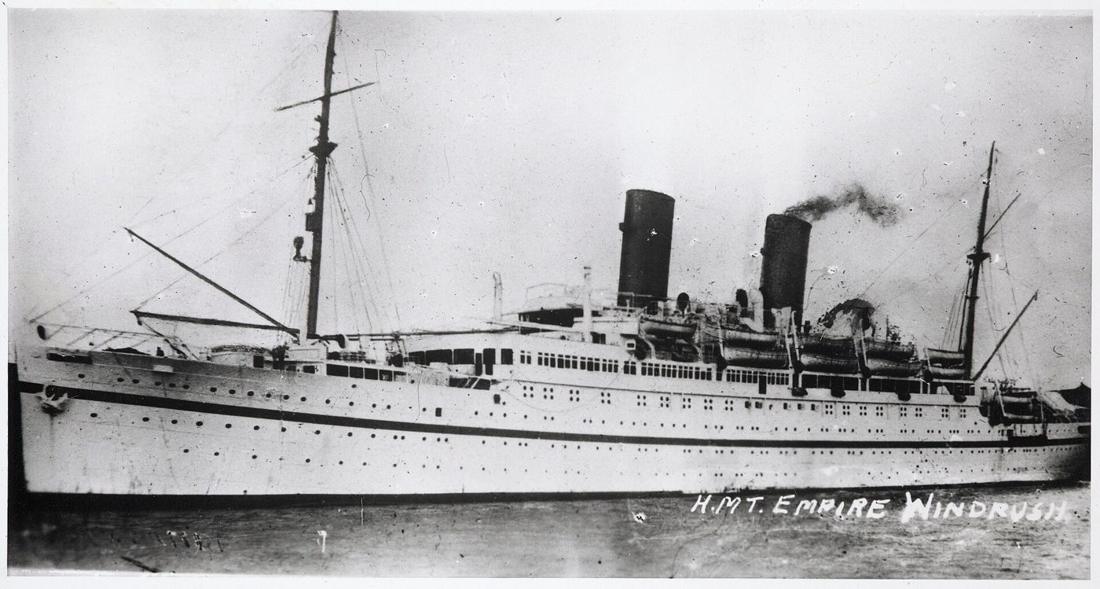
22 June 1948: the Empire Windrush

Find out who the passengers were and why they came.

Documents and facts

  • On 22 June 1948, the Empire Windrush arrived at Tilbury Docks with passengers from Jamaica, Trinidad and other Caribbean islands.
  • Britain needed workers to rebuild the country after the war. People from the colonies were British subjects with the right to live in Britain (British Nationality Act 1948).
  • On arrival, the calypso singer Lord Kitchener sang “London Is the Place for Me” for the newsreel cameras.

Sources: The National Archives: Windrush · British Pathé: Lord Kitchener, “London Is the Place for Me” (1948)

What you do

  1. Look at the ship and read the facts: list the reasons why people came.
  2. Watch the Pathé clip (link) and note three words from the song.
  3. Imagine the passengers’ hopes: write three hopes on cards (characters only, no personal stories).

Sentence starters

  • They came because…
  • Britain needed…
  • When they arrived, they hoped…

Speak up

Read one hope aloud as a character from 1948.

Learn how to learn · Explain it to a partner

Explain today’s main idea to a partner in 30 seconds, without notes. If you get stuck, that is the part to review.

3

Building Britain, then the 2018 scandal

Understand how belonging was promised, then questioned.

Documents and facts

  • Many people of the Windrush generation worked in the new NHS, created in 1948, and on buses and trains.
  • In 2018, the Windrush scandal revealed that some of them had been wrongly told they had no right to live in Britain. Some lost their jobs or were deported.
  • Since 2018, Windrush Day is celebrated every year on 22 June.

Sources: UK Government: Windrush Lessons Learned Review (2020) · GOV.UK: Annual day of celebrations for the Windrush Generation

What you do

  1. Read the facts and make a timeline: 1948, 1950s, 2018, today.
  2. Discuss: how could people who had lived in Britain for decades be treated as illegal?
  3. Write a headline for a newspaper in April 2018.

Sentence starters

  • They worked as…
  • In 2018, the government…
  • It was unfair because…

Speak up

Read your headline like a TV news anchor.

Learn how to learn · Word + picture

Draw a tiny picture next to each new word. Your brain remembers a word and an image better than a word alone.

4

Claudia Jones and the first carnival

See how culture can answer rejection.

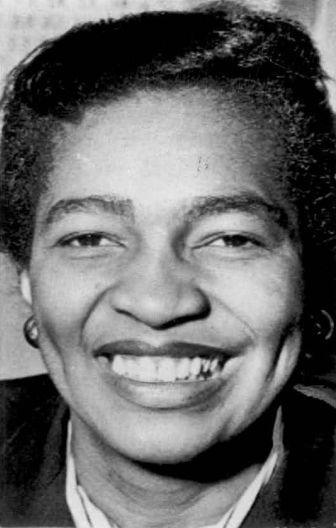
Claudia Jones (1915–1964), journalist and activist, founder of the West Indian Gazette.
Claudia Jones (1915–1964), journalist and activist, founder of the West Indian Gazette.Image: Possibly Seattle Times (archive) · Public domain · Wikimedia Commons
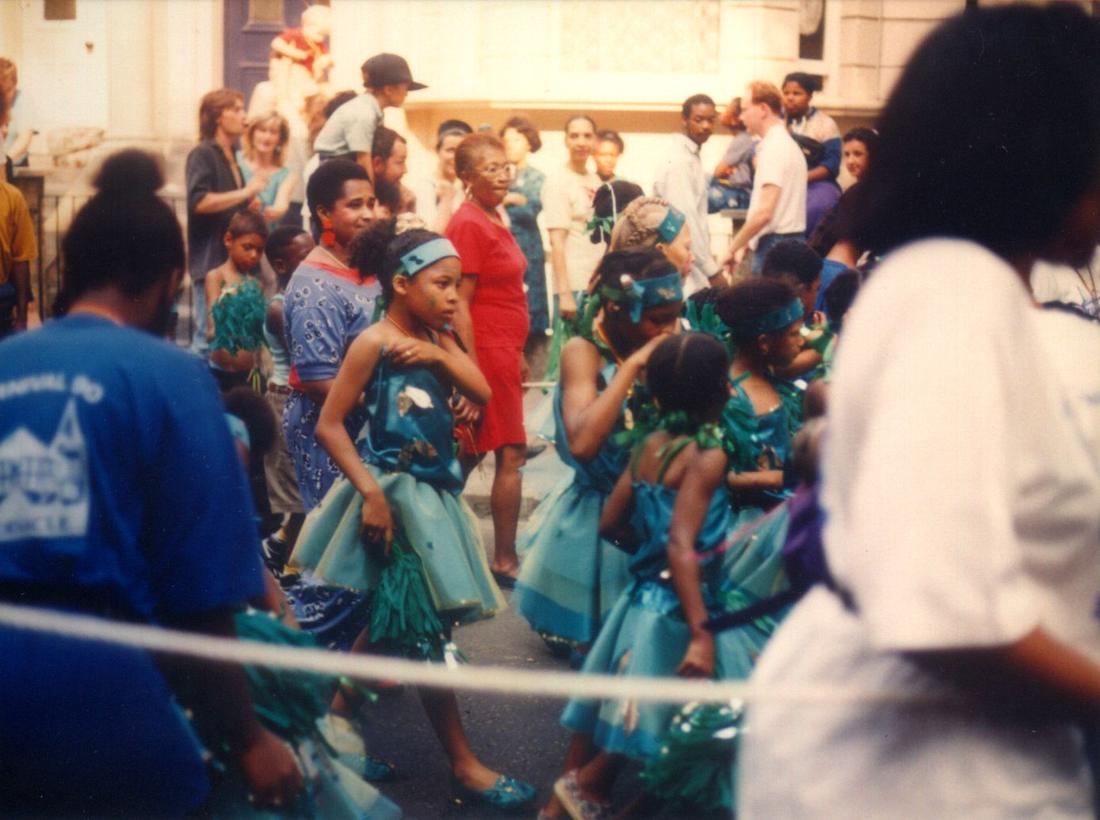
Notting Hill Carnival, London, 1989.
Notting Hill Carnival, London, 1989.Image: Magadag · CC BY 4.0 · Wikimedia Commons

Documents and facts

  • Claudia Jones was born in Trinidad. She founded the West Indian Gazette, a newspaper for Caribbean people in Britain, in 1958.
  • After the Notting Hill riots of 1958, she organised a Caribbean carnival at St Pancras Town Hall in January 1959.
  • Today, Notting Hill Carnival is one of the biggest street festivals in Europe.

Sources: The National Archives: Empire Windrush and the Notting Hill Carnival · Notting Hill Carnival (official site)

What you do

  1. Read the facts and find what Claudia Jones turned into a celebration.
  2. Look at the carnival photo: describe the colours, the music, the crowd.
  3. Discuss: can a festival be a political act?

Sentence starters

  • Claudia Jones turned… into…
  • A carnival can…
  • Culture is an answer to rejection because…

Speak up

Present Claudia Jones in 45 seconds as if you were opening the carnival.

Learn how to learn · Homemade flashcards

Write a question on one side and the answer on the other. Test yourself today, in 2 days and in a week.

5

Create your own game: Windrush Voyage

Invent a board game from Kingston to London.

What you do

  1. Draw a board: Kingston, the ocean, Tilbury, Brixton, Notting Hill, today.
  2. Make event cards (a job found, a door closed, a newspaper founded, a carnival). Each card asks the player to explain a choice in English.
  3. Write the rules with the rule starters and test them.

Sentence starters

  • If you land on…, you…
  • Each player must…
  • You win when…

Speak up

Each team plays one round in front of the class.

Learn how to learn · Spaced review

Review today’s words tonight for 5 minutes, then again in 3 days. Short and spaced beats long and once.

6

Final task: what did the Windrush generation give Britain?

Build an argued oral with documents.

What you do

  1. Choose a figure (Lord Kitchener, Claudia Jones, a Windrush nurse from the archives, Sam King…) and two documents.
  2. Prepare a 3–5 minute oral: who, what, why it matters today.
  3. Present, then answer two questions.

Sentence starters

  • I have chosen… because…
  • This document shows that…
  • Today, their legacy can be seen in…

Speak up

3–5 minute oral with two documents.

Learn how to learn · What I know / What I don’t know yet

Make two columns. A mistake is information: it tells you exactly what to practise next.

★ Create your own game: Windrush Voyage

A board game from Kingston to Tilbury to Notting Hill. Event cards (job found, door closed, carnival) make players explain a choice in English before they move.

Rule-writing starters

  • The aim of the game is to…
  • Each player must…
  • If you land on…, you…
  • You win when…
  • You miss a turn if…
  • Before you start, …

Final task

Argued oral (3–5 minutes, B1–B2): “What did the Windrush generation give Britain?”, with two documents.

Effort badges

Badges reward effort and progress, never a ranking. Everyone can earn every badge.

Sharp ListenerI understood a video or an audio and noted key facts.
Word HunterI collected new words and used them again.
Game DesignerI invented or improved a game.
Story TellerI retold a story or a life in English.
Comeback BadgeI did better than last time.

✓ Assessment

How will I be assessed?

Printable grid (PDF with QR code)

DURING I practise AT THE END I show what I know

Two kinds of assessment go with you. The first one helps you improve. The second one checks what you have learnt at the end.

During the sequence: formative assessmentAt the end: summative assessment
It helps you improve.It checks what you have learnt.
You are allowed to make mistakes: a mistake you spot is a mistake you will not make again.You show what you can do, with criteria you already know.
You check your own work with the checklist.The teacher uses the same grid as you.
In this sequence: sessions 1 to 5 (the playlist map, the 1948 hopes, the 2018 headline, the carnival opening, Windrush Voyage).In this sequence: your argued oral (3–5 minutes), marked out of 20.

While I practise, I can say

  • “I am not sure yet about…”
  • “Can you check if this fact is right: …?”
  • “I made a mistake with… Now I know that…”
  • “The word I want to remember is… because…”

Reminder: Printable grid (PDF with QR code) · Madame Carole Paoli Pompougnac · © 2026 · CC BY-NC-ND 4.0

⎙ Printable fiche

QR code to this journey

The one-page fiche sums up the journey: the big question, the sessions, the sentence starters, the final task and the badges. It has a QR code back to this page.

Open the printable fiche Assessment grid (PDF)

Image credits

Videos, films, songs and protected texts are not copied here: follow the links to the official sources.

Repères pour le professeur (en français)

Niveau : Première · CECRL visé : B1 → B2

Ancrage programme : Axe 1 « Identités et échanges » (la Windrush generation) + axe « Les aires anglophones américaines » (les Caraïbes : Claudia Jones, le carnaval)

Fil rouge : Identity, Voice, Fairness. Les blocs « Bridges » relient ce parcours aux autres parcours de la carte.

Évaluation : formative pendant les séances 1 à 5, sommative avec la tâche finale ; grille de notation et grille de correction dans l’onglet professeur du bloc d’évaluation, et en PDF avec QR code.

À noter : Aucune question sur l’origine des élèves. Les figures étudiées sont publiques. Clips Pathé : lien seulement.