← Map of all journeys parcours-anglais-lycee.netlify.app/premiere/who-owns-the-moon/

The big question

As countries and companies return to the Moon, who should decide how space is used, and who gets remembered in its history?

Why this journey?

In April 2026, four astronauts flew around the Moon for the first time since 1972. Companies now plan to mine it. In this journey, you discover the hidden women who made space flight possible, the treaty that says no nation can own the Moon, and today’s new space race. At the end, you write an argument: should private companies be allowed to mine the Moon?

LevelPremière (general)
TargetCEFR B1 → B2
Sessions6 sessions + a game + a final task
Final taskWritten argument (about 180 words, B1–B2) and a 2-minute oral: “Should private companies be allowed to mine the Moon?”

Bridges This journey is part of a path: each journey answers and builds on others.

⟵ Builds on…

Leads to… ⟶

Threads in this journey: OwnershipPowerFairnessPlanet

1

Moon auction

Ask whether anyone should own the Moon.

What you do

  1. Your teacher divides a Moon map into zones (water ice, flat landing sites, the far side). Teams bid with paper tokens.
  2. After the auction, discuss: who won, who lost, was it fair?
  3. Write one rule that would make the Moon fairer for everyone.

Sentence starters

  • We wanted this zone because…
  • It was unfair because…
  • A fair rule would be…

Speak up

Each team reads its rule aloud.

Learn how to learn · Quick Recall

Before you open your notes, write 3 things you remember from last time. Then check. Testing yourself works better than reading again.
2

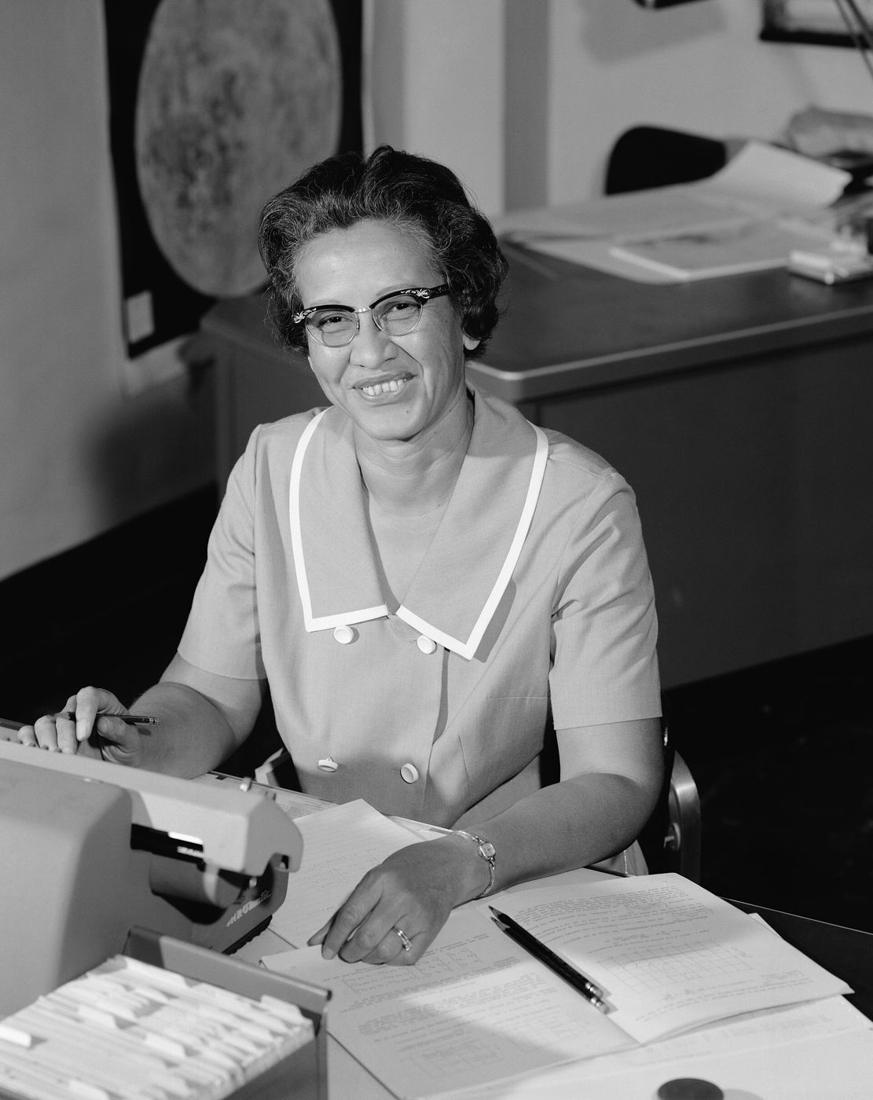
Katherine Johnson: the woman who checked the computer

Discover a hidden figure of space history.

Katherine Johnson at work at NASA’s Langley Research Center, 1966 (NASA).
Katherine Johnson at work at NASA’s Langley Research Center, 1966 (NASA).Image: Adam Cuerden · Public domain · Wikimedia Commons

Documents and facts

  • Katherine Johnson was a mathematician at NASA. She calculated trajectories for the first American space flights.
  • In 1962, before his orbit of the Earth, astronaut John Glenn asked for her to check the computer’s numbers by hand.
  • She worked in a segregated workplace at first. In 2015, she received the Presidential Medal of Freedom. The film Hidden Figures (2016) told her story.

Sources: NASA: Katherine Johnson biography · NASA: Hidden Figures

What you do

  1. Read the NASA biography and find three key dates.
  2. Discuss: why was her work “hidden” for so long?
  3. Write a 5-line tribute for a NASA plaque.

Sentence starters

  • Katherine Johnson proved that…
  • Her work was hidden because…
  • She deserves to be remembered because…

Speak up

Read your plaque text aloud like a NASA ceremony speaker.

Learn how to learn · Explain it to a partner

Explain today’s main idea to a partner in 30 seconds, without notes. If you get stuck, that is the part to review.

3

1967: the rules of space

Understand the treaty that governs the Moon.

Documents and facts

  • The Outer Space Treaty (1967), Article II: “Outer space, including the Moon and other celestial bodies, is not subject to national appropriation by claim of sovereignty, by means of use or occupation, or by any other means.”
  • On 20 July 1969, Neil Armstrong and Buzz Aldrin walked on the Moon. They planted a US flag, but the flag did not make the Moon American.

Sources: UN Office for Outer Space Affairs: Outer Space Treaty · NASA: Apollo 11

What you do

  1. Read Article II and rewrite it in one simple sentence.
  2. Discuss: does the treaty talk about companies? What is missing?
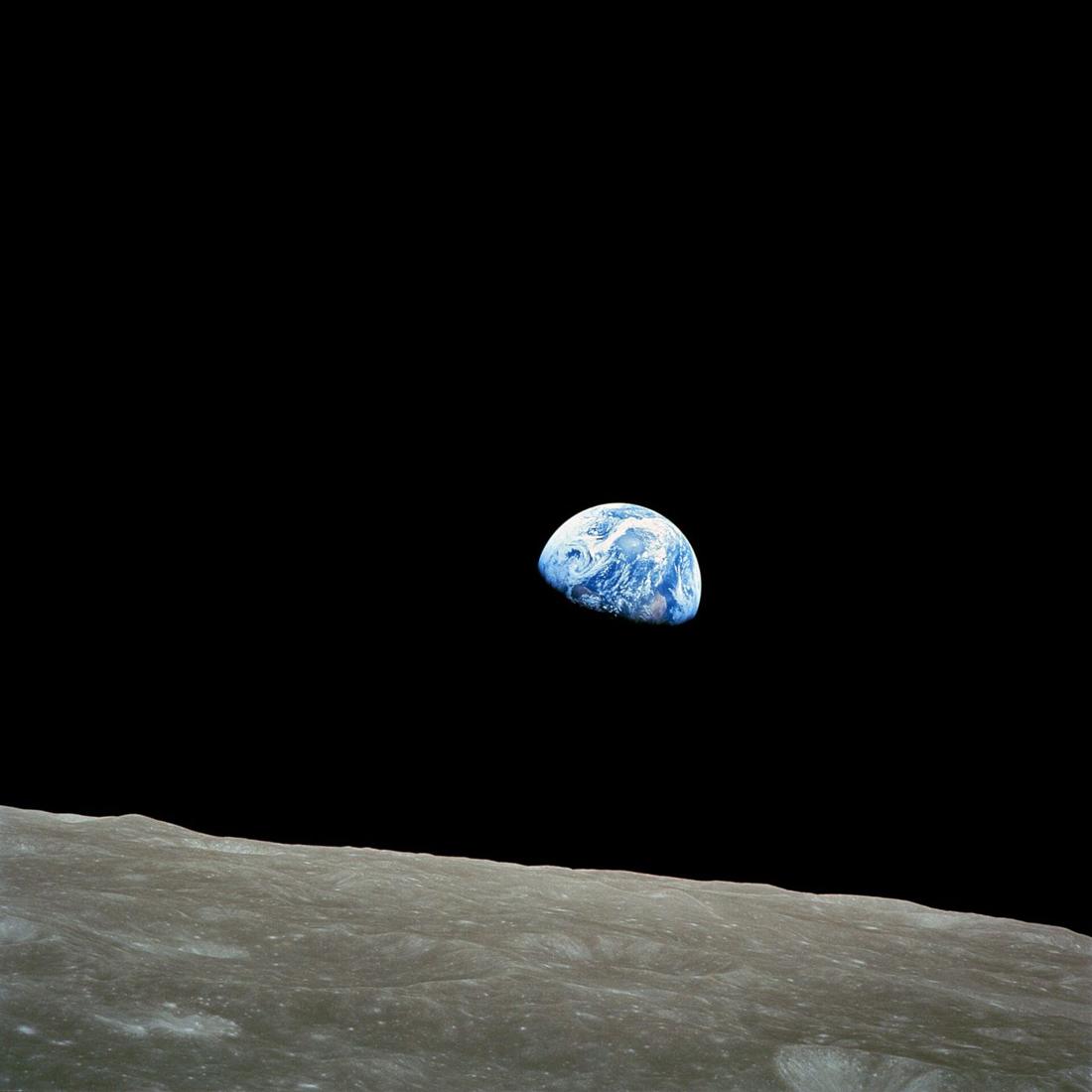
  3. Look at Earthrise: why did this photo change how people saw the Earth?

Sentence starters

  • The Outer Space Treaty says…
  • The treaty does not say…
  • Earthrise shows that…

Speak up

Explain the treaty to a younger student in 30 seconds.

Learn how to learn · Word + picture

Draw a tiny picture next to each new word. Your brain remembers a word and an image better than a word alone.

4

Artemis II and the new space race

See who the new players are.

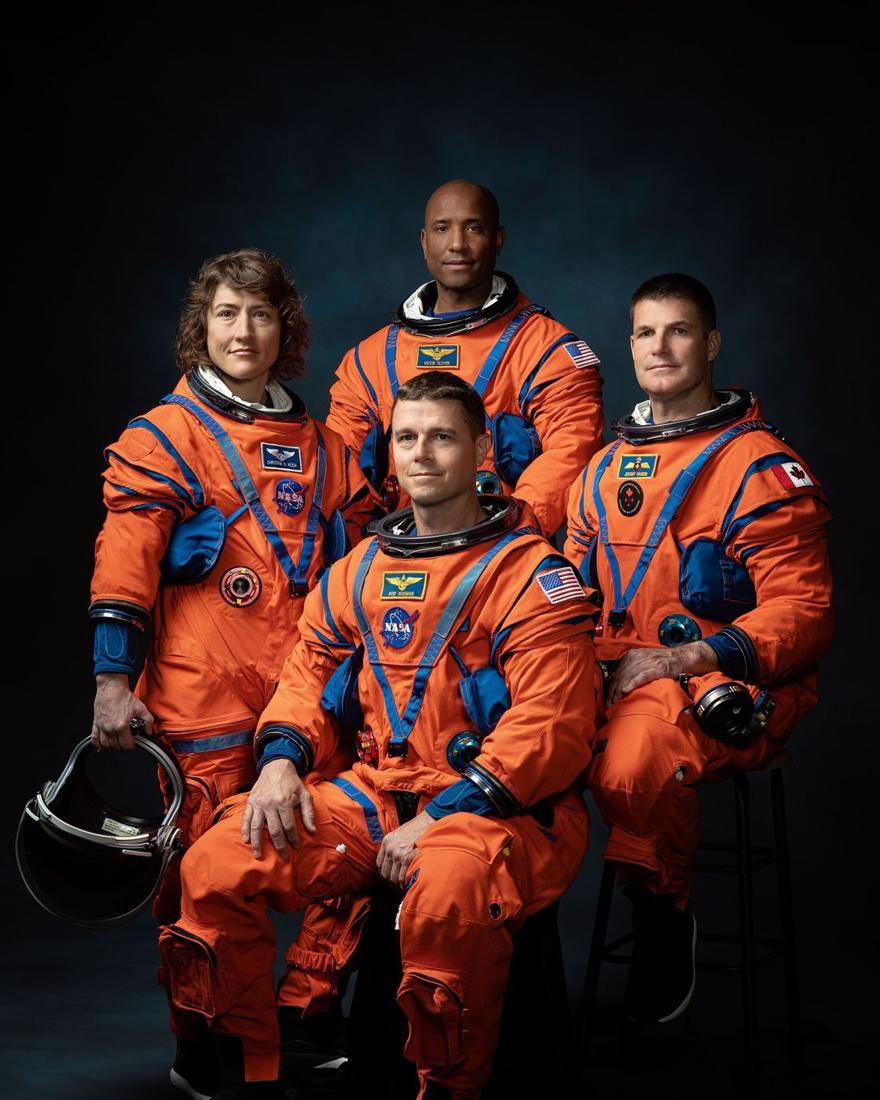
The Artemis II crew: Reid Wiseman, Victor Glover, Christina Koch and Jeremy Hansen (NASA).
The Artemis II crew: Reid Wiseman, Victor Glover, Christina Koch and Jeremy Hansen (NASA).Image: Josh Valcarcel · Public domain · Wikimedia Commons

Documents and facts

  • Artemis II launched on 1 April 2026. Its four astronauts flew around the Moon: the first crewed flight to the Moon since Apollo 17 in 1972.
  • Christina Koch became the first woman, Victor Glover the first Black astronaut and Jeremy Hansen the first Canadian to travel to the Moon.
  • The Artemis Accords (2020) are principles for exploring the Moon. Dozens of countries have signed them.

Sources: NASA: Artemis II · NASA: The Artemis Accords

What you do

  1. Read the NASA page and note the mission’s key facts.
  2. Compare the crew of Artemis II with the crew of Apollo 11: what changed?
  3. List the new players in space: countries and companies.

Sentence starters

  • Artemis II was the first…
  • Compared with 1969,…
  • The new players in space are…

Speak up

Present the Artemis II crew as a TV presenter, in 45 seconds.

Learn how to learn · Homemade flashcards

Write a question on one side and the answer on the other. Test yourself today, in 2 days and in a week.

5

Create your own game: Moon Base

Invent a strategy game where teams must share.

What you do

  1. Make resource cards (water, oxygen, energy, metal) and a Treaty card.
  2. Rule: every round, the Treaty card forces each team to share one resource.
  3. Write the rules with the rule starters and test them.

Sentence starters

  • The aim of the game is to…
  • Every round, each team must…
  • You win when…

Speak up

Play two rounds in front of the class.

Learn how to learn · Spaced review

Review today’s words tonight for 5 minutes, then again in 3 days. Short and spaced beats long and once.

6

Final task: should companies mine the Moon?

Write an argument and present it.

What you do

  1. Write about 180 words: your opinion, two arguments with facts, one argument from the other side.
  2. Present your argument in 2 minutes.
  3. The class debates, then votes.

Sentence starters

  • I believe space should…
  • The Outer Space Treaty says…
  • On the other hand,…

Speak up

2-minute oral based on your text, using keywords only.

Learn how to learn · What I know / What I don’t know yet

Make two columns. A mistake is information: it tells you exactly what to practise next.

★ Create your own game: Moon Base

A strategy game: teams build a Moon base with resource cards (water, oxygen, energy, metal). A Treaty card forces them to share one resource every round, so no team can win alone.

Rule-writing starters

  • The aim of the game is to…
  • Each player must…
  • If you land on…, you…
  • You win when…
  • You miss a turn if…
  • Before you start, …

Final task

Written argument (about 180 words, B1–B2) and a 2-minute oral: “Should private companies be allowed to mine the Moon?”

Effort badges

Badges reward effort and progress, never a ranking. Everyone can earn every badge.

Word HunterI collected new words and used them again.
Fair DebaterI gave an argument and listened to the other side.
Game DesignerI invented or improved a game.
Team PlayerI helped my group succeed.
Comeback BadgeI did better than last time.

✓ Assessment

How will I be assessed?

Printable grid (PDF with QR code)

DURING I practise AT THE END I show what I know

Two kinds of assessment go with you. The first one helps you improve. The second one checks what you have learnt at the end.

During the sequence: formative assessmentAt the end: summative assessment
It helps you improve.It checks what you have learnt.
You are allowed to make mistakes: a mistake you spot is a mistake you will not make again.You show what you can do, with criteria you already know.
You check your own work with the checklist.The teacher uses the same grid as you.
In this sequence: sessions 1 to 5 (the auction, the NASA plaque, the treaty in one sentence, the Artemis II presentation, Moon Base).In this sequence: your written argument (about 180 words), marked out of 20.

While I practise, I can say

  • “I am not sure yet about…”
  • “Can you check if this fact is right: …?”
  • “I made a mistake with… Now I know that…”
  • “The word I want to remember is… because…”

Reminder: Printable grid (PDF with QR code) · Madame Carole Paoli Pompougnac · © 2026 · CC BY-NC-ND 4.0

⎙ Printable fiche

QR code to this journey

The one-page fiche sums up the journey: the big question, the sessions, the sentence starters, the final task and the badges. It has a QR code back to this page.

Open the printable fiche Assessment grid (PDF)

Image credits

Videos, films, songs and protected texts are not copied here: follow the links to the official sources.

Repères pour le professeur (en français)

Niveau : Première · CECRL visé : B1 → B2

Ancrage programme : Axe « Innovations scientifiques et responsabilité » · objet d’étude : à qui appartient l’espace ?

Fil rouge : Ownership, Power, Fairness, Planet. Les blocs « Bridges » relient ce parcours aux autres parcours de la carte.

Évaluation : formative pendant les séances 1 à 5, sommative avec la tâche finale ; grille de notation et grille de correction dans l’onglet professeur du bloc d’évaluation, et en PDF avec QR code.

À noter : La vente aux enchères utilise des jetons fictifs ; aucune question sur l’argent des élèves. Images NASA : domaine public.