← Map of all journeys parcours-anglais-lycee.netlify.app/seconde-bac-pro/who-decides-whats-good-for-teens/

The big question

Who should decide what is good for young people: governments, parents, schools, or young people themselves?

Why this journey?

In December 2025, Australia banned social media accounts for under-16s. Some people said “Great!”, others said “Ask us first!” In this journey, you discover the rights of the child, the story of Malala, who was attacked for going to school, and the rules of school life in the UK. At the end, the class writes and votes its own Class Charter of rights and duties.

LevelSeconde bac pro
TargetCEFR A2 → B1
Sessions6 sessions + a game + a final task
Final taskSituation B training (A2–B1): present the Class Charter for 2–3 minutes, then answer questions. Situation A training: a short video on Malala.

Bridges This journey is part of a path: each journey answers and builds on others.

⟵ Builds on…

Leads to… ⟶

Threads in this journey: VoiceFairnessPower

1

Ban or not?

Give an opinion on a real law.

Documents and facts

  • On 10 December 2025, a new law in Australia came into force: social media companies must stop under-16s from having accounts.

Sources: eSafety Commissioner (Australia): social media minimum age

What you do

  1. Read the fact and vote: good idea or bad idea?
  2. Give one reason for and one reason against.
  3. Discuss: who should decide, the government, parents, or teens?

Sentence starters

  • I think the ban is… because…
  • On the other hand,…
  • The people who should decide are…

Speak up

Each student says one sentence with “I think… because…”.

Learn how to learn · Quick Recall

Before you open your notes, write 3 things you remember from last time. Then check. Testing yourself works better than reading again.
2

Children have rights too

Learn five articles of the UN Convention on the Rights of the Child.

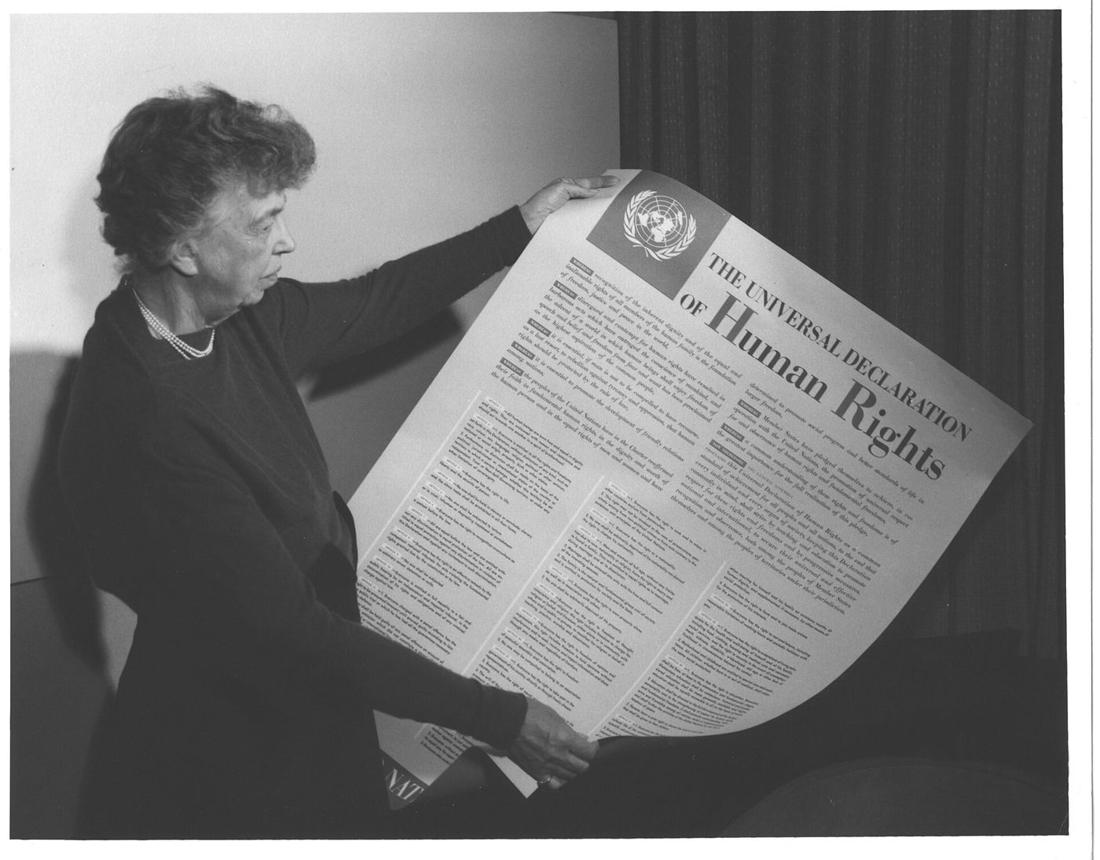
Eleanor Roosevelt holds the Universal Declaration of Human Rights (1948).
Eleanor Roosevelt holds the Universal Declaration of Human Rights (1948).Image: General Services Administration. National Archives and Records Service. Office of the Arch · Public domain · Wikimedia Commons

Documents and facts

  • The UN Convention on the Rights of the Child was adopted on 20 November 1989.
  • Article 12: children have the right to give their opinion. Article 28: the right to education. Article 31: the right to play and rest. Article 19: the right to be protected from violence. Article 13: the right to share information.

Sources: UNICEF UK: The Convention on the Rights of the Child · UNICEF: CRC in child-friendly language

What you do

  1. Match each article with a picture card.
  2. In pairs, act out a short school situation; the class names the right.
  3. Write each right as a full sentence: “Every child has the right to…”

Sentence starters

  • Every child has the right to…
  • This situation is about Article… because…
  • This right is important because…

Speak up

Act out your situation (30 seconds); the class names the right.

Learn how to learn · Explain it to a partner

Explain today’s main idea to a partner in 30 seconds, without notes. If you get stuck, that is the part to review.

3

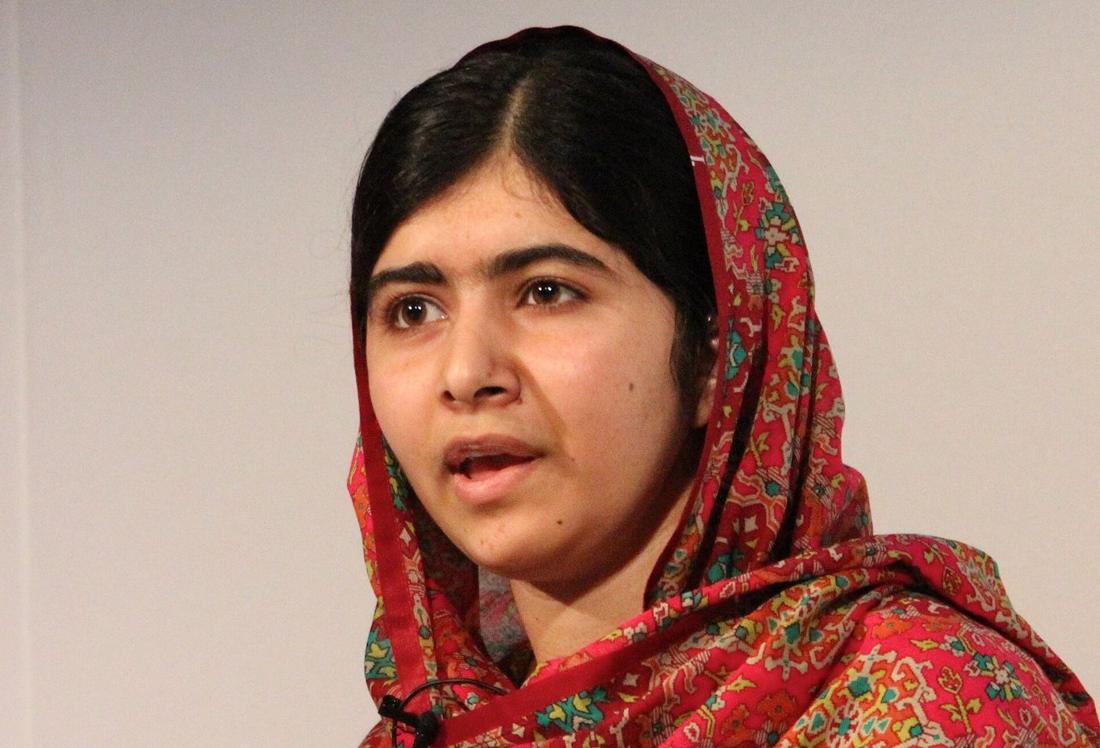
Malala: the right to go to school

Discover Malala’s story and her message.

Documents and facts

  • Malala Yousafzai was born in Pakistan in 1997. She spoke out for girls’ education.
  • On 9 October 2012, she was shot on her school bus. She survived.
  • On 12 July 2013, her 16th birthday, she spoke at the United Nations: “One child, one teacher, one book and one pen can change the world.”
  • In 2014, aged 17, she became the youngest winner of the Nobel Peace Prize.

Sources: The Nobel Prize: Malala Yousafzai · Malala Fund

What you do

  1. Put Malala’s life in order on a timeline: 1997, 2012, 2013, 2014.
  2. Listen to the famous sentence from her UN speech and repeat it with the right stress.
  3. Situation A training: watch a short official video (link) and note 5 key facts.

Sentence starters

  • Malala fought for…
  • In 2012,…
  • Her message is…

Speak up

Say Malala’s famous sentence, then explain it in your own words.

Learn how to learn · Word + picture

Draw a tiny picture next to each new word. Your brain remembers a word and an image better than a word alone.

4

School life in the UK

Learn the words of school rules, timetables and uniforms.

Documents and facts

  • Most schools in England ask students to wear a uniform. Since 2021, schools must keep uniform costs reasonable (Education (Guidance about Costs of School Uniforms) Act 2021).
  • In England, young people must stay in education or training until 18.

Sources: GOV.UK: School uniform · GOV.UK: The national curriculum

What you do

  1. Read a typical school day in England and complete the timetable.
  2. Sort the rules: rules that protect / rules that organise.
  3. Discuss: is a rule also a right? Give an example.

Sentence starters

  • In English schools, students must…
  • This rule protects…
  • This rule organises…

Speak up

Present one rule and say if it protects or organises.

Learn how to learn · Homemade flashcards

Write a question on one side and the answer on the other. Test yourself today, in 2 days and in a week.

5

Create your own game: Rights Race

Invent a board game about rights at school.

What you do

  1. Draw a board with 20 squares. Each square is a school situation.
  2. To move, a player must name the right and say it in a full sentence.
  3. Write the rules with the rule starters and test them.

Sentence starters

  • The aim of the game is to…
  • If you land on…, you…
  • You win when…

Speak up

Explain your game; another team plays one round.

Learn how to learn · Spaced review

Review today’s words tonight for 5 minutes, then again in 3 days. Short and spaced beats long and once.

6

Final task: our Class Charter

Write and present 6 rights and duties.

What you do

  1. In groups, write 6 lines: 3 rights and 3 duties for the class.
  2. Present your charter for 2–3 minutes, then answer questions (Situation B training).
  3. The class votes the final charter, line by line.

Sentence starters

  • In our class, every student has the right to…
  • Every student must…
  • We chose this rule because…

Speak up

2–3 minute presentation, then questions.

Learn how to learn · What I know / What I don’t know yet

Make two columns. A mistake is information: it tells you exactly what to practise next.

★ Create your own game: Rights Race

A board game: each square is a school situation. To move, name the right and say it in a full sentence.

Rule-writing starters

  • The aim of the game is to…
  • Each player must…
  • If you land on…, you…
  • You win when…
  • You miss a turn if…
  • Before you start, …

Final task

Situation B training (A2–B1): present the Class Charter for 2–3 minutes, then answer questions. Situation A training: a short video on Malala.

Effort badges

Badges reward effort and progress, never a ranking. Everyone can earn every badge.

Brave SpeakerI dared to speak in English, even with mistakes.
Word HunterI collected new words and used them again.
Game DesignerI invented or improved a game.
Rule WriterI wrote clear game rules in English.
Comeback BadgeI did better than last time.

✓ Assessment

How will I be assessed?

Printable grid (PDF with QR code)

DURING I practise AT THE END I show what I know

Two kinds of assessment go with you. The first one helps you improve. The second one checks what you have learnt at the end.

During the sequence: formative assessmentAt the end: summative assessment
It helps you improve.It checks what you have learnt.
You are allowed to make mistakes: a mistake you spot is a mistake you will not make again.You show what you can do, with criteria you already know.
You check your own work with the checklist.The teacher uses the same grid as you.
In this sequence: sessions 1 to 5 (the vote, the rights role-play, Malala’s timeline, the school rules, Rights Race).In this sequence: your Class Charter presentation (2–3 minutes) and your answers to questions, marked out of 20.

While I practise, I can say

  • “I am not sure yet about…”
  • “Can you check if this fact is right: …?”
  • “I made a mistake with… Now I know that…”
  • “The word I want to remember is… because…”

Reminder: Printable grid (PDF with QR code) · Madame Carole Paoli Pompougnac · © 2026 · CC BY-NC-ND 4.0

⎙ Printable fiche

QR code to this journey

The one-page fiche sums up the journey: the big question, the sessions, the sentence starters, the final task and the badges. It has a QR code back to this page.

Open the printable fiche Assessment grid (PDF)

Image credits

Videos, films, songs and protected texts are not copied here: follow the links to the official sources.

Repères pour le professeur (en français)

Niveau : Seconde bac pro · CECRL visé : A2 → B1

Ancrage programme : Voie professionnelle (BO spécial n° 5 du 11 avril 2019) · thèmes : école et vie scolaire ; système scolaire du pays ; droits de l’enfant et accès à l’éducation · entraînement Situation A et B

Fil rouge : Voice, Fairness, Power. Les blocs « Bridges » relient ce parcours aux autres parcours de la carte.

Évaluation : formative pendant les séances 1 à 5, sommative avec la tâche finale ; grille de notation et grille de correction dans l’onglet professeur du bloc d’évaluation, et en PDF avec QR code.

À noter : CAP : 4 droits seulement, cartes images, charte de 4 règles, oral d’1 minute. Situations A et B : format d’entraînement, sans exposition personnelle.