← Map of all journeys parcours-anglais-lycee.netlify.app/seconde-bac-pro/can-a-footballer-change-the-law/

The big question

Can a famous person use their fame to make society fairer, and what can ordinary people do together?

Why this journey?

Footballers are famous for goals. In 2020, Marcus Rashford became famous for something else: he asked the UK government to give meals to children during the summer holidays, and the government changed its decision. In this journey, you discover his campaign, a charity that saves food, and the link between sport, food and health. You never talk about your own family or money. At the end, you plan a Solidarity Match for a local charity.

LevelSeconde bac pro
TargetCEFR A2 → B1
Sessions6 sessions + a game + a final task
Final taskSituation B training (A2–B1): present the Solidarity Match plan (2–3 minutes) and answer questions.

Bridges This journey is part of a path: each journey answers and builds on others.

⟵ Builds on…

Leads to… ⟶

Threads in this journey: VoiceFairnessPower

1

Footballers with a cause

Discover that sport can be more than a game.
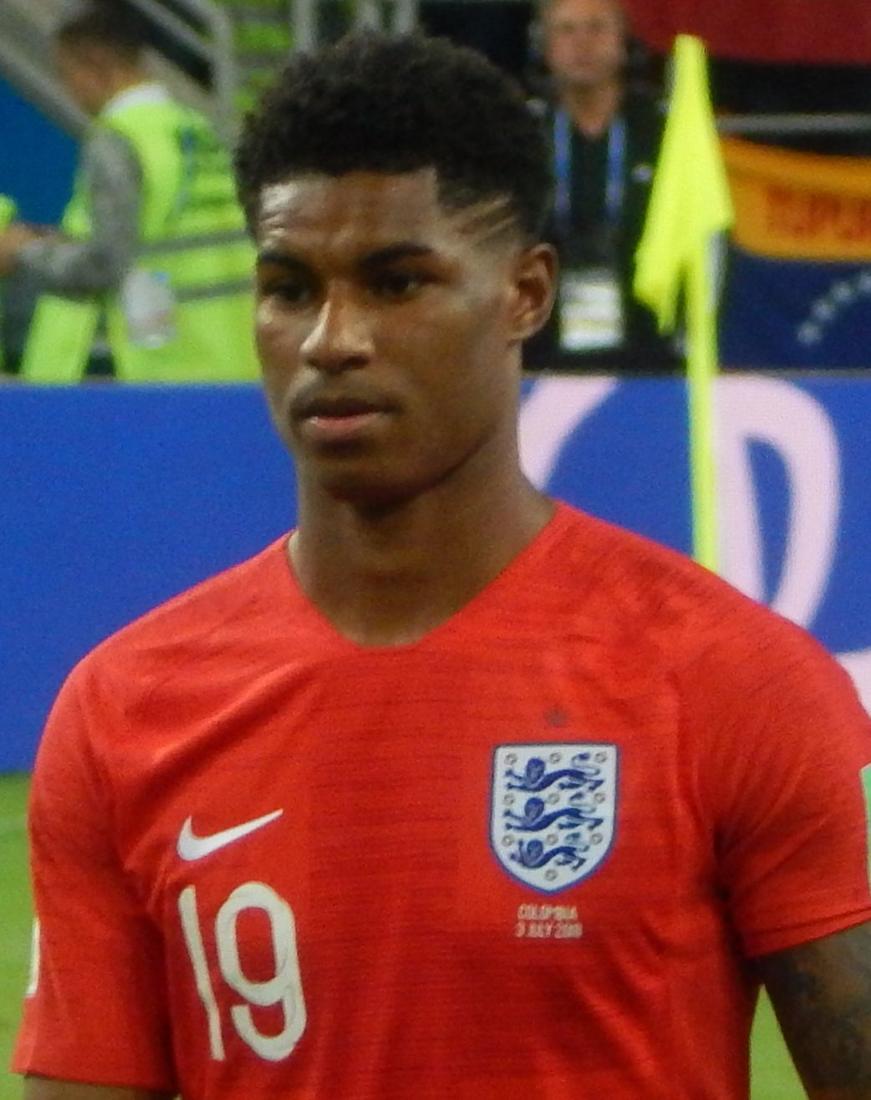
Marcus Rashford playing for England at the 2018 World Cup.
Marcus Rashford playing for England at the 2018 World Cup.Image: Oleg Bkhambri (Voltmetro) · CC BY-SA 4.0 · Wikimedia Commons

What you do

  1. Quiz: match famous athletes with their cause (your teacher gives the cards).
  2. Learn the words: campaign, charity, cause, volunteer, donate.
  3. Discuss: should famous athletes speak about society?

Sentence starters

  • … plays for… and supports…
  • A campaign is…
  • Athletes should / shouldn’t speak because…

Speak up

Present one athlete and their cause in two sentences.

Learn how to learn · Quick Recall

Before you open your notes, write 3 things you remember from last time. Then check. Testing yourself works better than reading again.

2

One letter, one U-turn

Find out how Rashford changed a decision.

Documents and facts

  • In June 2020, during the Covid pandemic, Marcus Rashford wrote an open letter to MPs. He asked the government to continue food vouchers for children during the summer holidays.
  • He wrote: “This is not about politics; this is about humanity.”
  • On 16 June 2020, the government changed its decision. In October 2020, Rashford received an MBE.

Sources: BBC Sport: Rashford calls for a U-turn (15 June 2020) · BBC News: Food voucher U-turn after Rashford’s campaign (16 June 2020)

What you do

  1. Read the facts and put the events in order.
  2. Find the key words of his letter.
  3. Discuss: why did one letter work?

Sentence starters

  • Marcus Rashford asked…
  • The government decided to…
  • His letter worked because…

Speak up

Read the famous sentence, then explain it in your own words.

Learn how to learn · Explain it to a partner

Explain today’s main idea to a partner in 30 seconds, without notes. If you get stuck, that is the part to review.

3

FareShare: saving food, feeding people

See how a charity organises solidarity.

Documents and facts

  • FareShare is a UK charity that collects good food that would be wasted and gives it to charities and community groups. Rashford worked with FareShare in 2020. In 2025, FareShare merged with another food charity, The Felix Project: together they are now called Felix.
  • In June 2025, the government announced that from September 2026, all children in families receiving Universal Credit in England can get free school meals.

Sources: Felix (formerly FareShare and The Felix Project) · GOV.UK: Over half a million more children to get free school meals (4 June 2025)

What you do

  1. Read how FareShare works and draw the chain: farm → shop → warehouse → charity → people.
  2. Find the jobs in the chain: driver, warehouse worker, cook, volunteer coordinator.
  3. Professional situation: you answer the phone at a charity warehouse. Practise the dialogue.

Sentence starters

  • A charity helps people by…
  • The food goes from… to…
  • In this job, you must…

Speak up

Role-play the phone call in pairs.

Learn how to learn · Word + picture

Draw a tiny picture next to each new word. Your brain remembers a word and an image better than a word alone.

4

Fuel your body

Talk about food, water and sport.

Documents and facts

  • The NHS Eatwell Guide shows the balance of a healthy diet: fruit and vegetables, starchy foods, proteins, dairy, and 6 to 8 glasses of fluid a day.

Sources: NHS: Eat well · NHS: The Eatwell Guide

What you do

  1. Look at the Eatwell Guide and name the food groups.
  2. Build a balanced menu for a football team before a match (characters, not yourselves).
  3. Present the menu like a team chef.

Sentence starters

  • A healthy breakfast includes…
  • Before a match, players should…
  • This menu is balanced because…

Speak up

Present your team menu in 45 seconds.

Learn how to learn · Homemade flashcards

Write a question on one side and the answer on the other. Test yourself today, in 2 days and in a week.

5

Create your own game: Match Day Menu

Invent a card game where you build a balanced meal.

What you do

  1. Make food cards with pictures and food groups.
  2. Rule: points for balance and water, never for price.
  3. Write the rules with the rule starters and test them.

Sentence starters

  • Each player must…
  • You score points for…
  • You win when…

Speak up

Explain your game; another team plays one round.

Learn how to learn · Spaced review

Review today’s words tonight for 5 minutes, then again in 3 days. Short and spaced beats long and once.

6

Final task: our Solidarity Match

Plan and present a charity event.

What you do

  1. In groups, plan a Solidarity Match: date, place, teams, food collection for a local charity, posters.
  2. Prepare a 2–3 minute presentation (Situation B training).
  3. Answer questions from the class.

Sentence starters

  • Our solidarity match will…
  • We will collect…
  • People can help by…

Speak up

2–3 minute presentation, then questions.

Learn how to learn · What I know / What I don’t know yet

Make two columns. A mistake is information: it tells you exactly what to practise next.

★ Create your own game: Match Day Menu

A card game: build a meal for a player before a match with food cards. Points for balance and water, never for cost.

Rule-writing starters

  • The aim of the game is to…
  • Each player must…
  • If you land on…, you…
  • You win when…
  • You miss a turn if…
  • Before you start, …

Final task

Situation B training (A2–B1): present the Solidarity Match plan (2–3 minutes) and answer questions.

Effort badges

Badges reward effort and progress, never a ranking. Everyone can earn every badge.

Team PlayerI helped my group succeed.
Word HunterI collected new words and used them again.
Game DesignerI invented or improved a game.
Brave SpeakerI dared to speak in English, even with mistakes.
Comeback BadgeI did better than last time.

✓ Assessment

How will I be assessed?

Printable grid (PDF with QR code)

DURING I practise AT THE END I show what I know

Two kinds of assessment go with you. The first one helps you improve. The second one checks what you have learnt at the end.

During the sequence: formative assessmentAt the end: summative assessment
It helps you improve.It checks what you have learnt.
You are allowed to make mistakes: a mistake you spot is a mistake you will not make again.You show what you can do, with criteria you already know.
You check your own work with the checklist.The teacher uses the same grid as you.
In this sequence: sessions 1 to 5 (the athlete quiz, the U-turn timeline, the phone role-play, the team menu, Match Day Menu).In this sequence: your Solidarity Match presentation (2–3 minutes) and answers, marked out of 20.

While I practise, I can say

  • “I am not sure yet about…”
  • “Can you check if this fact is right: …?”
  • “I made a mistake with… Now I know that…”
  • “The word I want to remember is… because…”

Reminder: Printable grid (PDF with QR code) · Madame Carole Paoli Pompougnac · © 2026 · CC BY-NC-ND 4.0

⎙ Printable fiche

QR code to this journey

The one-page fiche sums up the journey: the big question, the sessions, the sentence starters, the final task and the badges. It has a QR code back to this page.

Open the printable fiche Assessment grid (PDF)

Image credits

Videos, films, songs and protected texts are not copied here: follow the links to the official sources.

Repères pour le professeur (en français)

Niveau : Seconde bac pro · CECRL visé : A2 → B1

Ancrage programme : Voie professionnelle (BO spécial n° 5 du 11 avril 2019) · thèmes : sports nationaux et équipes célèbres ; spécialités alimentaires ; formes d’engagement humanitaire et citoyen · entraînement Situation B

Fil rouge : Voice, Fairness, Power. Les blocs « Bridges » relient ce parcours aux autres parcours de la carte.

Évaluation : formative pendant les séances 1 à 5, sommative avec la tâche finale ; grille de notation et grille de correction dans l’onglet professeur du bloc d’évaluation, et en PDF avec QR code.

À noter : Aucune question sur les ressources des familles : on parle d’un événement public et d’une association. CAP : cartes menus illustrées, affiche de 5 lignes, oral d’1 minute.