← Map of all journeys parcours-anglais-lycee.netlify.app/premiere-bac-pro/bargain-or-problem/

The big question

When something is very cheap, who pays the real price: workers, the planet, or all of us?

Why this journey?

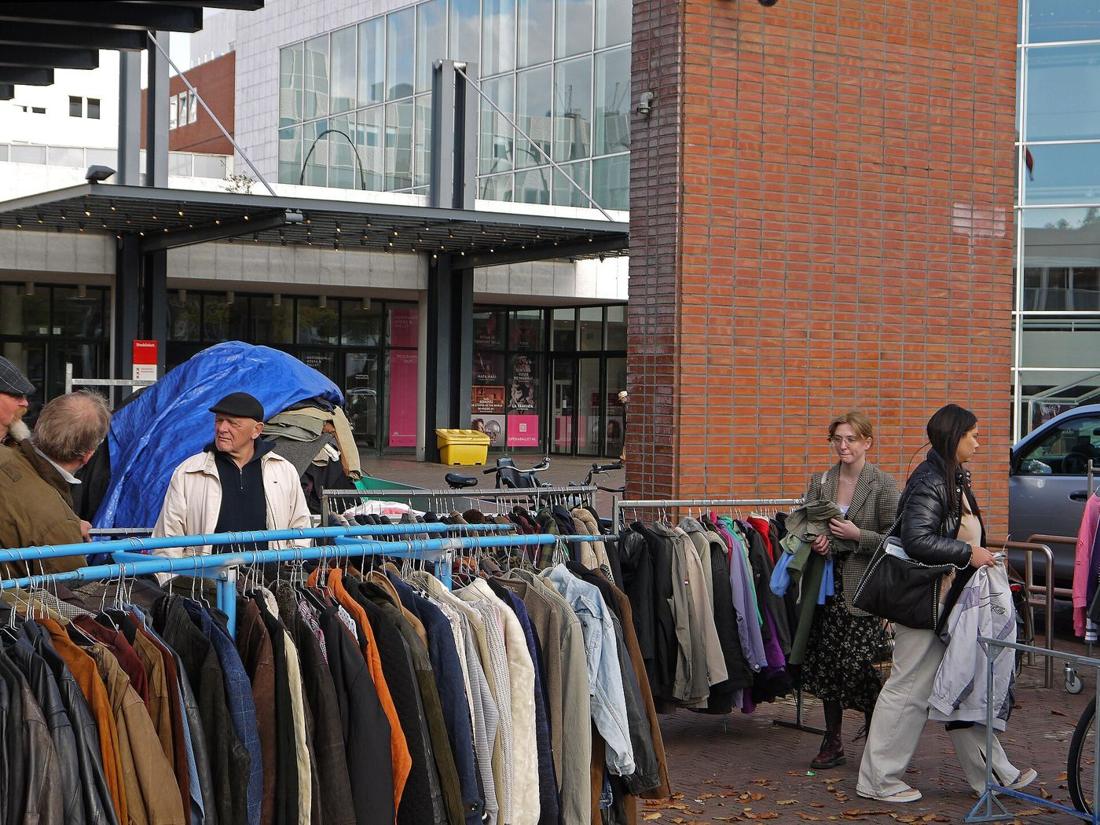
Fast fashion means cheap clothes made very quickly, sold in huge quantities, and thrown away fast. In this journey, you follow a T-shirt from the factory to the bin, you discover the Rana Plaza disaster, a brand that told customers not to buy, and the businesses that give clothes a second life. You never talk about what you or your family buy. At the end, you pitch a Second Life business like a real project.

LevelPremière bac pro
TargetCEFR A2 → B1
Sessions6 sessions + a game + a final task
Final taskSituation B training (B1): pitch your Second Life service (3 minutes) like a business project, then answer questions.

Bridges This journey is part of a path: each journey answers and builds on others.

⟵ Builds on…

Leads to… ⟶

Threads in this journey: PlanetFairnessPower

1

The real price of a T-shirt

Guess what is inside a price.

What you do

  1. Your teacher shows the parts of a T-shirt price: cotton, factory work, transport, shop, brand profit.
  2. In groups, guess the share of each part, then check with the teacher’s answer.
  3. Discuss: who gets the smallest part?

Sentence starters

  • This T-shirt is cheap because…
  • The workers get…
  • The biggest part goes to…

Speak up

Present your group’s guess in 30 seconds.

Learn how to learn · Quick Recall

Before you open your notes, write 3 things you remember from last time. Then check. Testing yourself works better than reading again.
2

Rana Plaza, 2013

Discover the human cost of fast fashion.

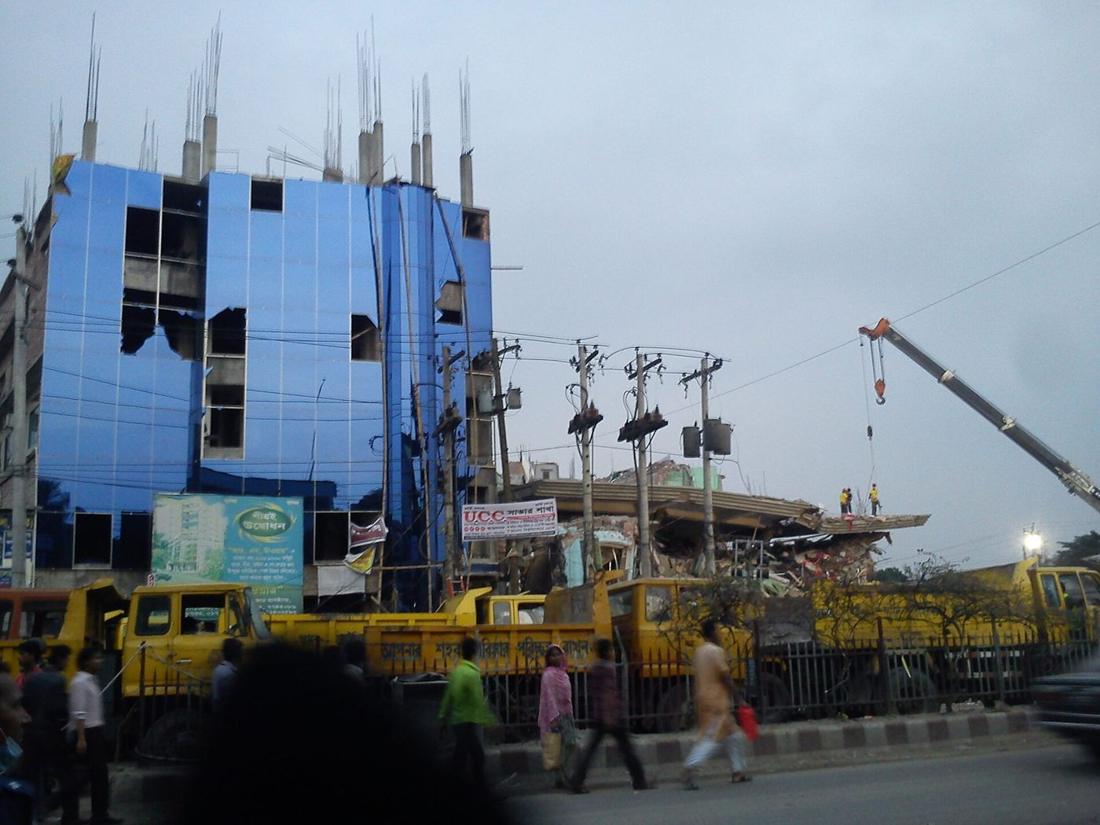
Savar, Bangladesh, April 2013: the collapsed Rana Plaza building.
Savar, Bangladesh, April 2013: the collapsed Rana Plaza building.Image: Sudipta06 · CC BY-SA 3.0 · Wikimedia Commons

Documents and facts

  • On 24 April 2013, the Rana Plaza building collapsed near Dhaka, Bangladesh. It contained clothing factories. More than 1,100 workers died.
  • After the disaster, the Fashion Revolution movement asked brands: “Who made my clothes?”

Sources: International Labour Organization: The Rana Plaza disaster ten years on · Fashion Revolution

What you do

  1. Read the facts and the ILO page: who worked there, what went wrong, what changed after?
  2. Write a question to a brand starting with “Who made…?”
  3. Professional situation: you are a quality inspector in a factory. List three safety checks.

Sentence starters

  • The building collapsed because…
  • After Rana Plaza,…
  • I would ask the brand…

Speak up

Read your question to the brand aloud.

Learn how to learn · Explain it to a partner

Explain today’s main idea to a partner in 30 seconds, without notes. If you get stuck, that is the part to review.

3

Don’t Buy This Jacket

See whether a business can be green.

Documents and facts

  • On Black Friday 2011, the outdoor brand Patagonia published an advert in The New York Times: “Don’t Buy This Jacket.” It asked customers to buy less and repair more.
  • Black Friday is the Friday after Thanksgiving in the United States, a day of big discounts.

Sources: Patagonia: Don’t Buy This Jacket (2011) · UNEP: Sustainability and circularity in the textile value chain

What you do

  1. Read the Patagonia page and explain the paradox: a brand that says “don’t buy”.
  2. Discuss: is it a real green idea, or clever marketing?
  3. Write a short slogan for buying less.

Sentence starters

  • Black Friday makes people…
  • Patagonia wanted…
  • A green business can…

Speak up

Two-minute class debate: real idea or clever marketing?

Learn how to learn · Word + picture

Draw a tiny picture next to each new word. Your brain remembers a word and an image better than a word alone.

4

Where do our clothes go?

Follow clothes after the bin.

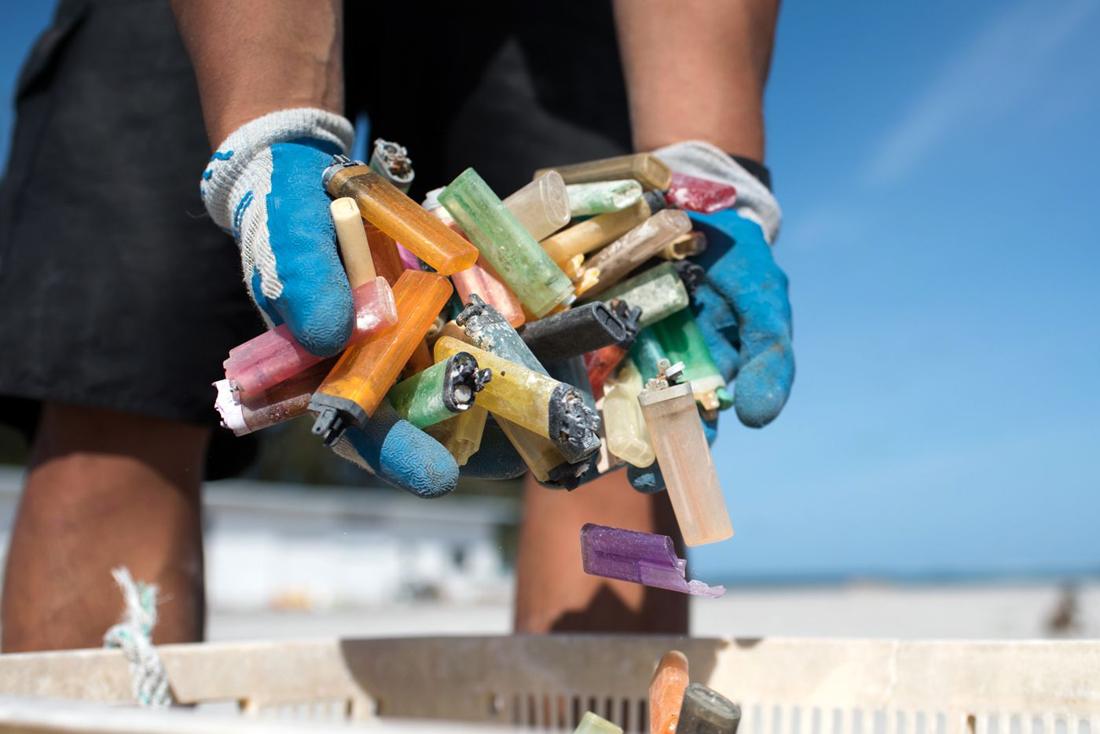
Marine debris collected on a beach (US National Marine Sanctuaries).
Marine debris collected on a beach (US National Marine Sanctuaries).Image: National Marine Sanctuaries · Public domain · Wikimedia Commons

Documents and facts

  • According to the Ellen MacArthur Foundation (2017), the equivalent of one garbage truck of textiles is landfilled or burned every second in the world.
  • Synthetic clothes, like polyester, release tiny plastic fibres when they are washed.

Sources: Ellen MacArthur Foundation: A new textiles economy (2017) · WRAP (UK): Textiles

What you do

  1. Read the facts and draw the life of a T-shirt: field, factory, shop, wardrobe, bin, landfill or ocean.
  2. Add the “second life” options: repair, swap, resell, upcycle, recycle.
  3. Choose the best option for three objects your teacher describes.

Sentence starters

  • After the bin, clothes go to…
  • Instead, we could…
  • The best option for this object is… because…

Speak up

Present the life of a T-shirt in 45 seconds.

Learn how to learn · Homemade flashcards

Write a question on one side and the answer on the other. Test yourself today, in 2 days and in a week.

5

Create your own game: Shop Smart

Invent a cooperative board game with a shared planet counter.

What you do

  1. Draw a board with shop squares and planet squares.
  2. Rule: each choice moves your score AND the shared planet counter: the whole class wins or loses together.
  3. Write the rules with the rule starters and test them.

Sentence starters

  • If you land on…, you…
  • The planet counter goes up when…
  • Everybody wins when…

Speak up

Explain your game; another team plays one round.

Learn how to learn · Spaced review

Review today’s words tonight for 5 minutes, then again in 3 days. Short and spaced beats long and once.

6

Final task: pitch a Second Life business

Pitch a business project.

What you do

  1. In groups, create a Second Life service: a repair café, a swap shop, an upcycling workshop, an online resale service…
  2. Prepare a 3-minute pitch: the service, the customers, the price, the benefit for the planet (Situation B training).
  3. Answer questions like in a job interview or a business meeting.

Sentence starters

  • Our service helps customers…
  • It is good for the planet because…
  • Customers will choose us because…

Speak up

3-minute pitch, then questions.

Learn how to learn · What I know / What I don’t know yet

Make two columns. A mistake is information: it tells you exactly what to practise next.

★ Create your own game: Shop Smart

A cooperative board game: shop squares and planet squares. Each choice moves your score and the shared planet counter, so the whole class wins or loses together.

Rule-writing starters

  • The aim of the game is to…
  • Each player must…
  • If you land on…, you…
  • You win when…
  • You miss a turn if…
  • Before you start, …

Final task

Situation B training (B1): pitch your Second Life service (3 minutes) like a business project, then answer questions.

Effort badges

Badges reward effort and progress, never a ranking. Everyone can earn every badge.

Word HunterI collected new words and used them again.
Team PlayerI helped my group succeed.
Game DesignerI invented or improved a game.
Brave SpeakerI dared to speak in English, even with mistakes.
Comeback BadgeI did better than last time.

✓ Assessment

How will I be assessed?

Printable grid (PDF with QR code)

DURING I practise AT THE END I show what I know

Two kinds of assessment go with you. The first one helps you improve. The second one checks what you have learnt at the end.

During the sequence: formative assessmentAt the end: summative assessment
It helps you improve.It checks what you have learnt.
You are allowed to make mistakes: a mistake you spot is a mistake you will not make again.You show what you can do, with criteria you already know.
You check your own work with the checklist.The teacher uses the same grid as you.
In this sequence: sessions 1 to 5 (the price guess, the question to a brand, the Patagonia debate, the life of a T-shirt, Shop Smart).In this sequence: your business pitch (3 minutes) and answers, marked out of 20.

While I practise, I can say

  • “I am not sure yet about…”
  • “Can you check if this fact is right: …?”
  • “I made a mistake with… Now I know that…”
  • “The word I want to remember is… because…”

Reminder: Printable grid (PDF with QR code) · Madame Carole Paoli Pompougnac · © 2026 · CC BY-NC-ND 4.0

⎙ Printable fiche

QR code to this journey

The one-page fiche sums up the journey: the big question, the sessions, the sentence starters, the final task and the badges. It has a QR code back to this page.

Open the printable fiche Assessment grid (PDF)

Image credits

Videos, films, songs and protected texts are not copied here: follow the links to the official sources.

Repères pour le professeur (en français)

Niveau : Première bac pro · CECRL visé : A2 → B1

Ancrage programme : Voie professionnelle (BO spécial n° 5 du 11 avril 2019) · thèmes : habitudes de consommation, grandes enseignes, commerce en ligne ; environnement, développement durable et transition écologique · entraînement Situation B

Fil rouge : Planet, Fairness, Power. Les blocs « Bridges » relient ce parcours aux autres parcours de la carte.

Évaluation : formative pendant les séances 1 à 5, sommative avec la tâche finale ; grille de notation et grille de correction dans l’onglet professeur du bloc d’évaluation, et en PDF avec QR code.

À noter : Aucune question sur les achats des élèves ou de leur famille. Images protégées (publicité Patagonia) : lien seulement.